
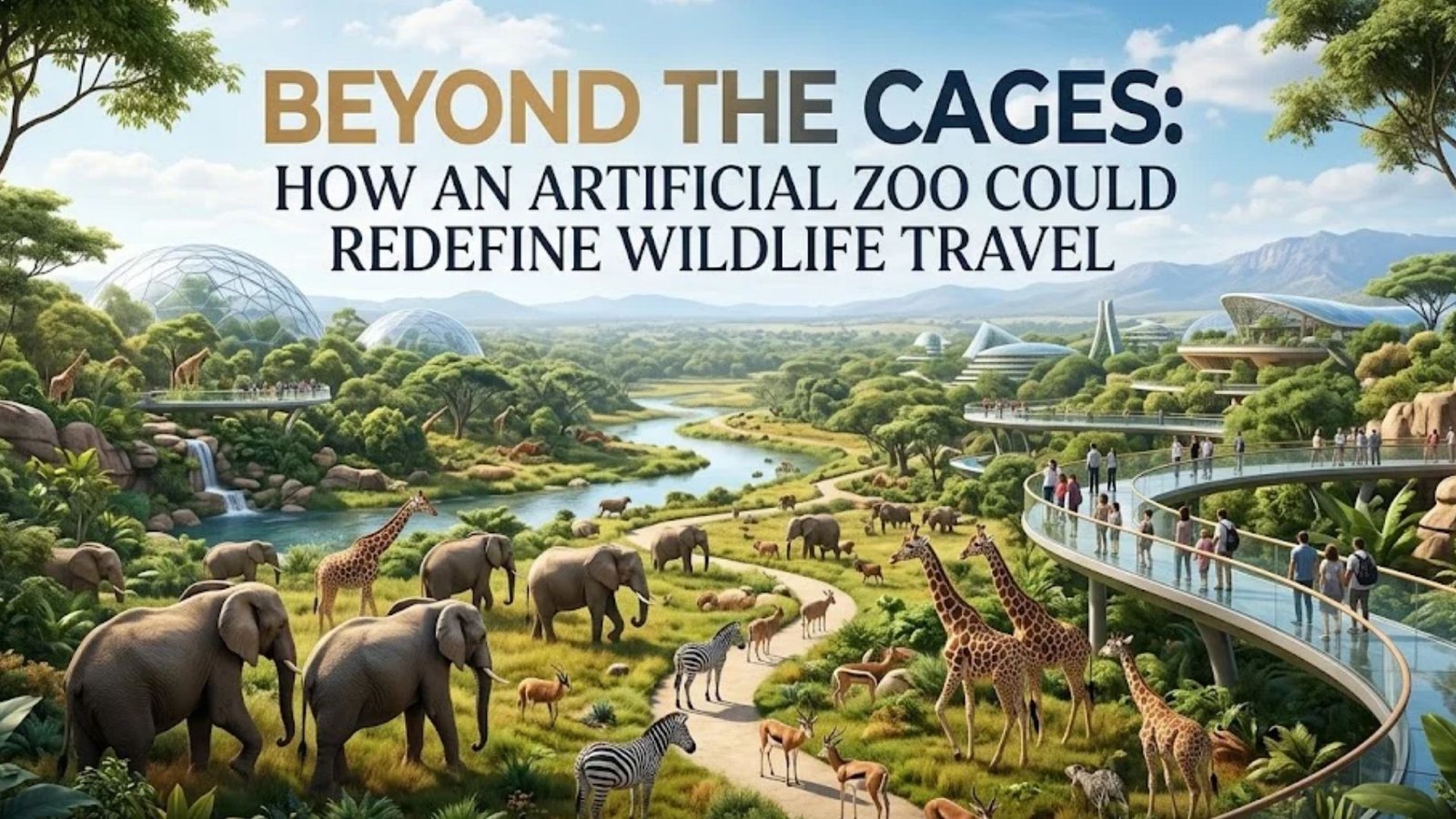
Picture this. You step into a dim hall in the middle of a busy city. A digital elephant walks out of the mist and sweeps its trunk past your shoulder. There’s no cage and no fence. No living animal feels stressed. That’s the promise of an artificial zoo, and it’s winning attention from travelers across the USA.
Many Americans love wildlife. Still, plenty of them feel uneasy about animals in captivity. Technology offers a middle path. It blends animatronic animals, light, sound, and story into one immersive technology attraction. This guide explains how it works. You’ll see the types, the pros and cons, the costs, the ethics, and where the idea is headed.
What Is an Artificial Zoo?
An artificial zoo is a wildlife attraction built mostly with technology. It doesn’t keep captive wildlife in enclosures. It recreates animals and their homes with machines and media instead. Think of it as a museum-style attraction, a theme park, and a classroom rolled into one. Some venues are fully simulated. Others mix a few live-animal areas with digital zones. You can picture the range as a simple line: traditional zoo → hybrid zoo → fully digital zoo.
The goal is simple. Show people amazing animals without animal welfare worries. A venue can offer a simulated rainforest in the morning and an Arctic coast by afternoon. It can even bring back extinct species at full size. That kind of freedom is hard for any traditional park to match.
How Does a Digital Zoo Create Realistic Encounters?
Realism comes from layers. Projection mapping paints moving scenery across walls and floors. Surround sound adds distant bird calls. Moving floors can mimic a rumbling herd. In an augmented reality zoo, your phone places life-sized digital animals right in the room. Robots add touch and physical presence. Together, they build an immersive nature experience that feels surprisingly real.
Types of Artificial Zoo Experiences
Digital wildlife venues come in several flavors. Some focus on machines. Others lean on headsets or light shows. The best pick depends on your budget and your group. The table below gives you a quick map.
| Type | What you’ll see | Best for |
| Robotic and animatronic parks | Moving machines with lifelike skin | Families and photo lovers |
| VR and AR safaris | Headset or phone-based animals | Teens and tech fans |
| Hologram and projection exhibits | Animals made of light in big rooms | Young kids and large crowds |
| Online and at-home zoos | Webcams and 3D models | Classrooms and remote families |
Many places blend two or more types. A venue might pair robots with projection mapping for extra drama. Read the details before you buy tickets.
Robotic and Animatronic Zoo Parks
Here, robotic animals take center stage. An animatronic tiger can blink, growl, and stalk through fake grass. Engineers use motors, sensors, and soft skins to copy real movement. These parks suit families who want something physical. Kids can stand close without any risk to people or animals.
Virtual Reality and Augmented Reality Safaris
A virtual reality safari puts a headset on your face and drops you onto the savanna. An augmented reality zoo works differently. It places animals into your real surroundings through a phone or tablet. Google Search even lets you view some animals in 3D from your own living room. Check motion warnings first because some people feel dizzy.
Hologram and Projection-Mapped Exhibits
A hologram wildlife exhibit uses light to create holographic animals that seem to float in space. These shows work well for big crowds. Visitors don’t need headsets. They simply walk in and look around. Lighting and sound do the rest.
Online and At-Home Virtual Zoo Experiences
You don’t need a plane ticket for this one. A virtual zoo can run on your laptop. The Smithsonian’s National Zoo offers live animal cams. Teachers use tools like these for environmental education. They’re free and easy. They don’t give you a full-body interactive wildlife exhibit, though.
Why Travelers Are Interested in Artificial Zoo Experiences
Attitudes are shifting. More travelers ask hard questions about animal welfare before they buy a ticket. They want ethical wildlife tourism that feels good afterward. An artificial zoo experience gives them a guilt-free option. It also fits the rise of responsible travel, where people choose trips that match their values.
Convenience matters too. A digital venue can sit in a mall, a resort, or downtown. Rain won’t cancel your day. Kids can meet animals from five continents in one afternoon. That saves time and gas money. It also makes wildlife fun open to families who live far from a big zoo.
Accessibility for Families, Seniors, and Visitors with Disabilities
Digital venues can be easier to navigate. Flat floors, seating, and short routes help seniors. Many offer a sensory-friendly session with softer lights and lower sound. In the USA, public attractions must follow the Americans with Disabilities Act. Ask each venue about ramps, captioning, and quiet rooms before you go.
Seeing Animals a Traditional Zoo Can’t Show
Tech can show what real zoos can’t. You can follow animal migration across continents in minutes. You can dive into the deep sea. You can meet extinct species like the woolly mammoth. This is powerful conservation education because it shows change over time. A static enclosure can’t do that.
Artificial Zoo vs. Traditional Zoo: Pros and Cons
Digital venues have clear strengths. No living animal sits in an enclosure for our entertainment. The doors stay open in any weather. Safety risks drop because nobody handles big predators. Content also updates fast. New research can appear on screen next week. That keeps the story fresh.
Still, there are trade-offs. A machine can’t match the awe of a real wild gaze. Tech costs money to build and fix. Screens can glitch. Some visitors miss the bond with a living creature. Real zoos face limits too. Even their best built habitats can’t match open range. Accredited zoos also do real wildlife conservation work. The Association of Zoos and Aquariums shares details on its member programs.
Side-by-Side Comparison
This table sums up traditional zoos vs digital zoos in plain terms.
| Factor | Traditional zoo | Digital zoo |
| Animal welfare | Depends on the zoo’s standards | No live animals kept for display |
| Authenticity | Real animals and real behavior | Simulated but often detailed |
| Weather impact | Often affected | Mostly unaffected |
| Accessibility | Varies by layout | Often easier, with quiet options |
| Conservation funding | Common in accredited zoos | Varies by venue |
| Upkeep | Animal care and food | Power, software, and repairs |
Is a Virtual Zoo Cheaper Than a Real One?
It depends. Digital venues skip animal food and vet bills. However, they pay for robots, projectors, software, and power. Those bills can be large. Ticket prices vary by city and venue. Compare the total cost for your group, including parking and snacks. Always check each venue’s official site for current rates.
Planning Your Visit to an Artificial Zoo
A little prep makes the day smoother. First, check the format. Is the place fully digital, partly robotic, or mixed with live animals? Next, look at age guidance and run time. Then check motion warnings and flashing lights. If you’re planning your first visit to an artificial zoo, build a route that suits everyone in your group.
Book an early slot. Crowds are thinner and each interactive wildlife exhibit works better. Wear comfy shoes. Charge your phone if the venue uses an app. Bring ear protection if loud sound bothers you. Skip any VR zone if you get motion sick. The checklist below helps you stay organized.
| Check this | Why it matters |
| Format of the venue | Fully digital and hybrid venues feel very different |
| Age limits | Some effects scare small children |
| Accessibility | Ramps, seating, and quiet rooms improve comfort |
| Motion and flash warnings | Protects guests who are sensitive |
| Run time | Helps you plan meals and breaks |
| Headset or app needs | Avoids surprises at the door |
Is a Digital Zoo Suitable for Children?
Usually, yes. Young kids often love big moving creatures. Teens enjoy games and simulations. Still, dark rooms and sudden sounds can frighten little ones. A calm talk before you enter helps a lot. Read the venue’s age advice first. A sensory-friendly session can make the day easier for sensitive kids.
Typical Ticket Prices and Budget Tips for US Families
Prices vary by city and venue. Many places offer family bundles, weekday discounts, and online deals. Check the official website for current rates. Avoid third-party sellers that add big fees. Set a small budget for food and souvenirs too. A simple trick helps. Compare the price against the hours of fun you’ll get.
Notable Artificial Zoo and Digital Wildlife Attractions Around the World
This field is young. Real examples are still limited. That’s why you should verify any venue before you travel. Quality venues share a few traits. They explain their science. They name expert partners. They update their content often. Those signs show a team that cares about conservation education.
Gimmicks do the opposite. They chase photos and skip facts. Look for honest signs and clear safety rules. A good show should still teach you something. Even a flashy theme park style ride can carry a real message about wildlife.
Digital Wildlife Attractions in the United States
Case study: Disney’s Animal Kingdom in Florida is a hybrid. It keeps live animals but also uses big technology. Rides such as Avatar Flight of Passage show how family entertainment can blend real and simulated wonders. The National Zoo’s webcams, mentioned earlier, add a free online layer. Check official sites for current offerings.
Examples in Europe and Asia
Case study: Circus Roncalli in Germany replaced live animal acts with holograms starting in 2018, according to news reports. In Japan, teamLab builds huge digital art spaces that deliver an immersive nature experience. They aren’t zoos. Still, they show how far light and sound can go. Confirm current details on official sites.
Emerging and Pilot Projects to Watch
Many ideas are still in the test stage. Museums try new rooms built around a hologram wildlife exhibit. Aquariums test AR guides. Startups run pop-up tours in malls. Follow tourism news and venue newsletters. New openings can appear fast.
Can an Artificial Zoo Support Conservation?
Technology alone can’t save a species. Only protected wilderness and strong laws do that. Yet digital venues can spark care. People protect what they understand. Senegalese conservationist Baba Dioum said it well in 1968:
“In the end, we will conserve only what we love; we will love only what we understand; and we will understand only what we are taught.”
A visit can show habitat loss, climate threats, and endangered species in a simple way. Kids can watch ice melt around a polar bear. Teens can play conservation games. That stirs action. Honest venues also say clearly that screens don’t replace real nature.
How Digital Zoos Can Partner with Conservation Groups
Venues can send part of each ticket to rescue centers and field programs. They can host talks from biologists. They can link visitors to groups like the World Wildlife Fund or the U.S. Fish and Wildlife Service. Look for clear numbers on where the money goes. Open reporting builds trust.
Ethical and Practical Challenges
No model is perfect. Some critics ask if an artificial zoo cheapens nature. Seeing a real animal can stir deeper feelings. A show full of robotic animals could also suggest that wildlife is easy to replace. Venues must avoid that message. Honest storytelling is the cure. Strong venues say plainly what’s real and what’s simulated.
Practical limits matter too. Machines break. Software needs updates. Large installations need skilled staff. Costs may push ticket prices up. Small towns may struggle to keep these venues running. Smart planning and steady funding make a big difference.
Environmental Footprint: Energy Use and E-Waste
Screens, projectors, and motors use lots of power. Old gear becomes e-waste. A venue that cares about sustainable tourism will use efficient lighting, clean energy, and recycling plans. Ask about these steps before you book. This matters to eco-tourism fans who want their trips to match their values.
Data Privacy and Safety in Tech-Driven Attractions
Apps and headsets collect data. Some track your movement or photos. Read the privacy policy before you tap agree. Parents should check what data a child’s profile shares. Venues should also clean headsets between guests and test rides for safety. Good habits protect everyone.
The Future of Wildlife Tourism
The next decade looks bright. AI could tailor each visit to your interests. Mixed reality could blend real and virtual animals in one space. Hybrid models may pair rescue centers with digital layers that explain each animal’s story. This approach supports responsible travel while keeping real animals in the loop.
An artificial zoo may not replace every old zoo. Many places will evolve instead. The winners will combine honesty, science, and fun. Travelers will choose the ethical zoo alternative that tells the truth. Clear rules, strong partners, and open reporting will earn trust over time.
Will Digital Zoos Replace Traditional Zoos?
Probably not soon. Both models can coexist. Accredited zoos run breeding programs for endangered species that no screen can copy. Digital venues can reach people who may never visit a zoo. Think of them as partners. One builds love for wildlife. The other protects living animals.
Frequently Asked Questions About Artificial Zoos
Is an Artificial Zoo Real or Virtual?
It can be both. Some venues use physical robots and built sets. Others use headsets or screens. Many mix the two. Always read the venue’s description before you book. That way you’ll know what to expect.
Are Artificial Zoos Better for Animals?
They remove the need to keep animals in captivity for display. That helps animal welfare. However, they don’t protect wild habitats by themselves. Real protection still needs funding, science, and strong laws.
Are Digital Zoos Safe for Kids?
Usually, yes. Check age guidance and sensory warnings first. Dark rooms and sudden sounds can scare small children. A sensory-friendly session may help. Stay close and talk through what they’ll see.
How Much Does a Digital Zoo Ticket Cost?
Prices vary by venue and city. Check the official site for current rates. Look for family bundles and weekday deals. Compare the full cost, including parking and food, before you decide.
Can You Visit a Virtual Zoo Online for Free?
Yes. The National Zoo’s live cams are free to watch. They show live animals rather than simulations. Still, they make a handy starting point for kids and classrooms.
Do Artificial Zoos Help Conservation?
They can help with awareness and environmental education. They don’t replace wildlife conservation work in the field. The best venues support real projects and say so openly. That honesty builds trust.
Final thought: An artificial zoo isn’t a cure for wildlife loss. It’s a doorway. A robotic leopard or a simulated rainforest may be artificial. The curiosity it sparks can be completely real.