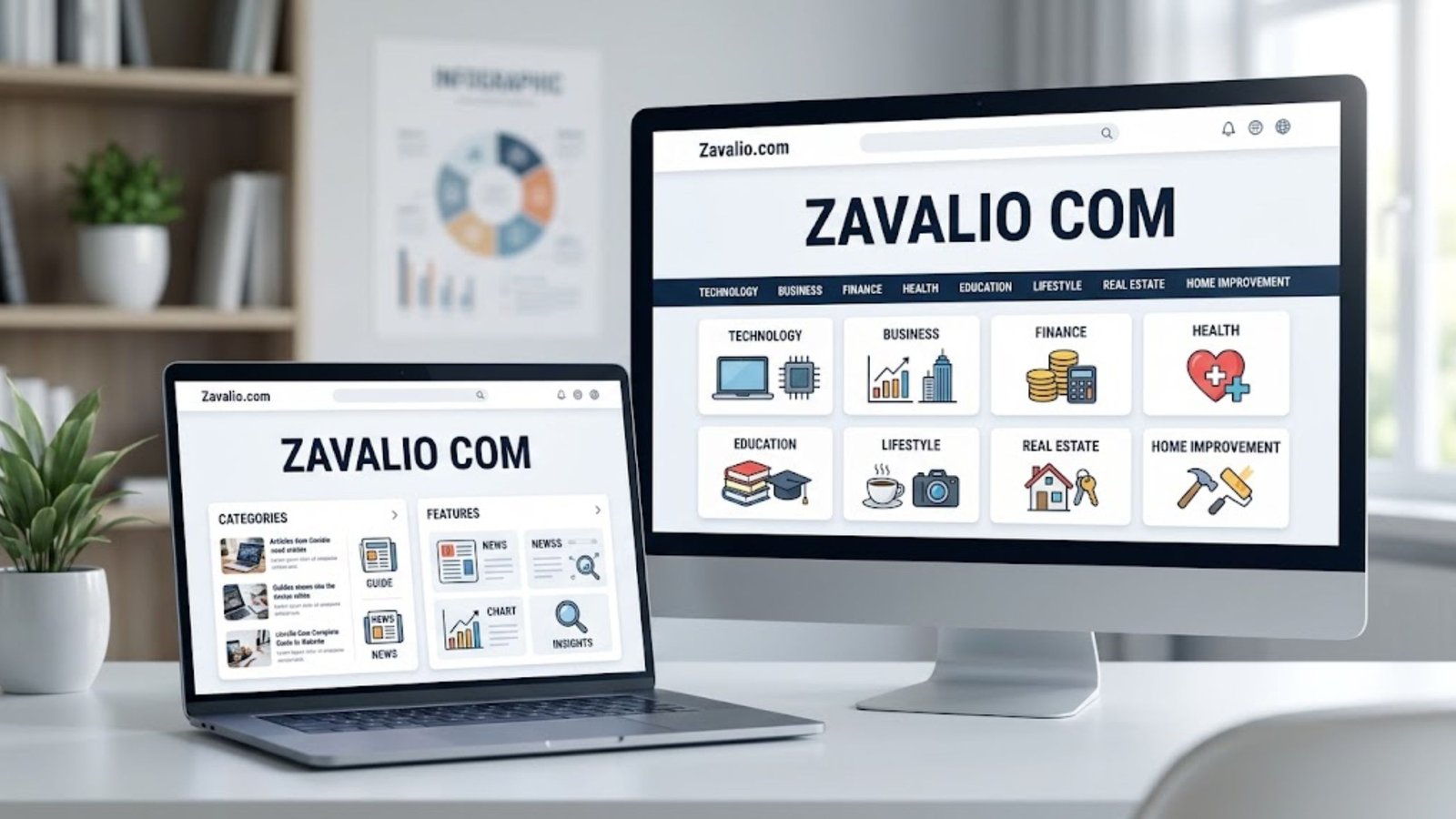
The internet is overflowing with websites, yet finding useful information in one place can still feel difficult. Zavalio Com website offers a broad mix of topics for readers who want to explore technology, business, finance, health, education, lifestyle, real estate, and home improvement. Founded in 2023, Zavalio.com has grown into an independent digital publication with a wide range of articles and editorial formats.
You can find explainers, practical guides, features, insights, and other Zavalio Com content designed around different reader needs. Whether you’re researching a new technology, following business developments, or looking for practical information, Zavalio Com articles give you plenty of subjects to explore while keeping the reading experience clear, accessible, and engaging for modern readers.
What Is Zavalio Com?
At its core, Zavalio.com is an independent digital publication focused on subjects that affect modern readers. The site describes itself as an online media and publishing platform founded in 2023. Its content covers everyday questions, industry developments, technology changes, financial subjects, and broader lifestyle issues.
The Zavalio com publication is not built around one narrow subject. Instead, its editorial model allows different topics to receive different forms of coverage. A simple question may need a practical article. A complicated subject may need an explainer. A developing issue may need deeper analysis. That flexibility shapes the site’s overall identity.
What Does Zavalio Com Offer?
The Zavalio com platform offers several types of online information for people with different interests. Its current website presents articles, explainers, features, editorials, insights, practical reads, and informational guides. This creates a reading experience that can move from quick understanding to deeper exploration without forcing every subject into one format.
For example, Zavalio com articles may explain a new technology while another piece explores a business development or practical home issue. The site also provides Zavalio com guides for readers who need useful information in a more structured form. This variety gives the publication room to address both everyday questions and broader developments.
Zavalio Com Categories and Main Topics
The Zavalio com website categories cover technology, finance, business, health, education, lifestyle, real estate, and home improvement. The site’s current homepage also describes coverage involving news-driven subjects, emerging trends, practical issues, and developments that influence how people work and live.
Within these areas, readers can find Zavalio com technology articles alongside Zavalio com business articles, finance material, health coverage, and property-related information. The categories are broad rather than rigid. That matters because modern subjects often overlap. A technology story can affect business. A housing trend can influence personal finance.
Main Topic
Typical Coverage
Technology
AI, software, digital products, emerging technology
Business
Companies, entrepreneurship, industries, business developments
Wellness, health information, practical health topics
Education
Learning, careers, skills, academic subjects
Lifestyle
Everyday living, interests, trends, personal choices
Real Estate
Property, housing, ownership, market developments
Home Improvement
Maintenance, projects, design, practical home advice
What Type of Content Does Zavalio Com Publish?
Zavalio com content goes beyond standard blog posts. The publication describes several formats including explainers, features, editorials, analysis, practical reads, and guides. Each format serves a different purpose. An explainer can simplify a technical subject while a feature can give a complicated topic more room and context.
This approach also makes Zavalio com editorial content easier to understand. Some articles focus mainly on facts and explanation. Others provide analysis or an identifiable viewpoint. That distinction matters for readers because an opinion should not be mistaken for established fact. The publication states that it aims to maintain this difference.
Explainers, Features, and Practical Reads
The Zavalio com explainers format is useful when a subject feels confusing at first glance. Features can provide more depth and background. Meanwhile, practical reads and Zavalio com practical information focus on questions or situations readers may encounter in everyday life. The format changes according to the purpose of the content.
How Does Zavalio Com Work?
Think of the Zavalio com online experience as a broad information library rather than a single-topic blog. A reader can arrive through a specific article and then explore related subjects across the wider publication. The site says its growing archive gives readers opportunities to discover related ideas and move between areas naturally.
Behind that experience is a subject-led publishing model. The topic comes first. Then the editorial format follows. A complex technology development might need context and explanation. A home question might benefit from practical guidance. An industry change could require analysis and insights. This keeps the format connected to the reader’s actual needs.
From Topic to Published Article
The basic process can be viewed as a simple chain: subject, research, editorial angle, content format, publication, and reader discovery. This approach helps prevent every article from sounding identical. It also supports subject-led publishing because the writing structure responds to the topic instead of following one fixed template.
Why Do People Visit Zavalio Com?
Readers often visit a broad publication because they want answers without jumping between dozens of websites. The Zavalio com latest articles section can introduce readers to current subjects while the wider archive provides evergreen practical guides and educational material. The homepage describes the publication as a place to follow subjects and developments that matter.
Another reason is variety. One person may want technology and AI coverage. Another may need information about property or home projects. Someone else may want business insights or financial information. Instead of building separate reading habits for every subject, readers can explore several areas within one broader online media publication.
Is Zavalio Com Safe and Trustworthy?
Trust requires more than a polished website design. Readers should examine how information is presented, whether claims have context, and whether important facts can be verified elsewhere. Zavalio states that it aims to provide accurate, well-researched, and current information while also acknowledging that it cannot guarantee the completeness or accuracy of every piece of content.
That statement gives readers an important clue about how to use Zavalio com information responsibly. General articles can help you understand a subject. However, high-stakes decisions may require primary sources or qualified professionals. This is especially relevant to health information, financial decisions, legal matters, and other subjects where circumstances can change quickly.
How Readers Can Check Online Information
A sensible approach is to check the publication date, examine supporting information, compare important claims with authoritative sources, and separate factual statements from opinions. This habit works across the web. It also helps readers get more value from accessible information without treating any single article as the final word.
Zavalio Com Editorial Philosophy and Approach
The publication’s editorial philosophy centers on usefulness, clarity, context, and reader value. Its About page says the goal is to turn subjects worth paying attention to into content worth reading. It also emphasizes readable content without removing the details that give a subject meaning.
That philosophy can be seen in the range of formats. Editorial articles can provide opinions and arguments. Features can explore subjects more deeply. Guides can organize useful information around practical needs. The publication also says it considers the difference between what is known, what can reasonably be inferred, and what someone believes.
Why Editorial Format Matters
A strong article format should match its purpose. A reader looking for a definition needs something different from someone researching an industry trend. By using features, editorials, explainers, and practical reads for different purposes, the publication can address subjects without forcing every story into the same structure.
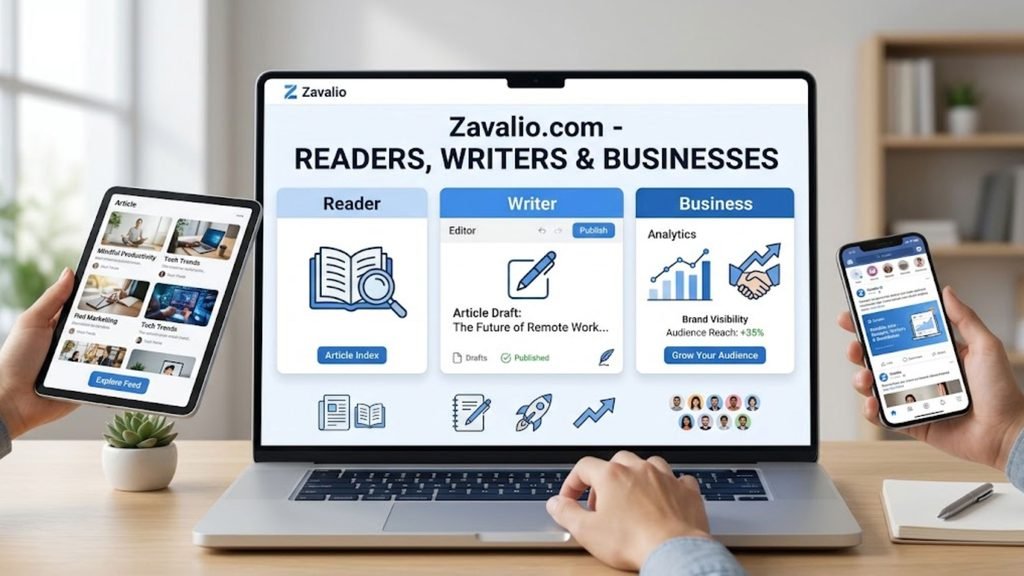
Zavalio Com for Readers, Writers, and Businesses
Readers are not the only people who can interact with the publication. Writers can submit contributions while businesses and brands can explore commercial opportunities. The contributor page says submissions should be original, informative, structured, accurate, and readable. It also describes editorial review before publication.
For businesses, the advertising section lists display advertising, sponsored articles, brand features, and promotional content. It also states that commercial material is treated differently from independent editorial work. That separation helps readers understand whether they are viewing editorial content or paid communication.
Zavalio Com for Writers
Writers can propose relevant subjects and provide writing samples or background information. The current contributor guidance discusses originality, structure, accuracy, and natural linking. It also states that submissions do not automatically guarantee publication.
Zavalio Com for Businesses
Businesses can contact the publication about advertising, sponsored articles, brand features, or promotional campaigns. The current advertising guidance recommends including the company name, website, campaign objective, preferred format, and timeline.
Audience
Potential Use
Readers
Explore latest articles, guides, explainers, and insights
Writers
Propose original articles and subject-focused contributions
Businesses
Explore advertising and sponsored content
Brands
Present products, services, launches, or company stories
Professionals
Follow industry trends and specialist subjects
Frequently Asked Questions About Zavalio Com
What Is Zavalio Com?
Zavalio Com is an independent digital publication established in 2023. It covers technology, business, finance, health, education, lifestyle, real estate, home improvement, and other relevant subjects. Its formats include articles, explainers, features, editorials, insights, practical reads, and guides.
What Topics Does Zavalio Com Cover?
The main areas include business and entrepreneurship, technology, finance and investment, health and wellness, education and careers, lifestyle, property and housing, and home improvement. The publication may also cover related subjects when they fit its broader editorial direction.
What Type of Articles Does Zavalio Com Publish?
The site publishes standard articles alongside explainers, features, editorials, analysis, practical reads, and informational resources. This means readers can encounter both straightforward explanations and deeper discussions.
Can Writers Submit Articles?
Yes. The current contributor information invites writers and subject-matter contributors to submit relevant material. It emphasizes originality, accuracy, structure, readability, and editorial suitability. Submission does not guarantee publication.
Can Businesses Advertise on Zavalio Com?
Yes. The website currently describes opportunities involving display advertising, sponsored articles, brand features, and promotional content. Availability and suitability depend on the campaign and publication requirements.
Is Zavalio Com Free to Read?
The website provides publicly accessible articles and information online. Individual access conditions can change over time, so readers should check the current website when accessing specific material.
Is Zavalio Com Useful for Research?
It can be a useful starting point for general research and topic discovery. However, important claims should be checked against authoritative sources, especially for medical, legal, financial, or other high-stakes subjects.
Final Thoughts on Zavalio Com
Zavalio Com brings several areas of modern life into one broad content platform. Its coverage ranges from technology and finance to health, education, lifestyle, property, and home improvement. Its stated publishing model also goes beyond ordinary articles by using explainers, features, editorials, insights, practical reads, and guides.
For readers, the value comes from having different forms of useful content in one place. For writers, the publication offers a route for relevant contributions. For businesses, it provides commercial formats that can support brand communication. As with any independent publication, readers should still verify important information and consider the context behind individual claims.
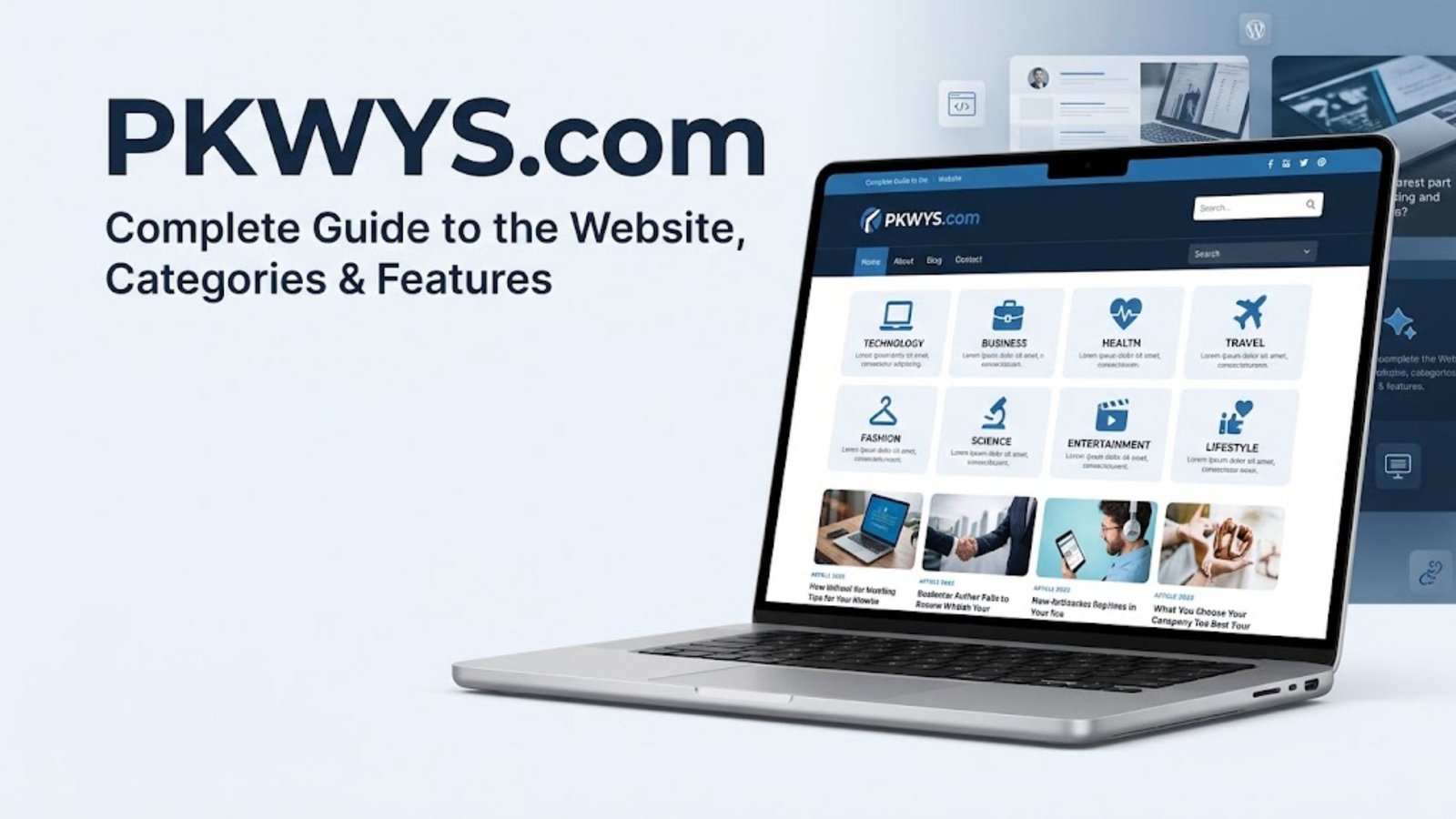
If you enjoy exploring different subjects online, PKWYS.com website offers a broad place to discover useful information. The platform brings together PKWYS articles covering areas such as technology, business, health, travel, fashion, science, and entertainment. Instead of focusing on one narrow subject,
it gives readers a chance to explore varied PKWYS content from a single digital platform. You can browse categories, check recent posts, or search for topics that catch your attention. Whether you’re looking for practical ideas, educational material, or something interesting to read, PKWYS.com provides several paths to explore. This guide explains what the website offers, how its categories work, and what you should know before using its information.
What Is PKWYS.com?
At its core, PKWYS.com is an online platform that brings together information across several subject areas. The site describes its blog as a place for insights, news, and analysis about different topics around the world. Its homepage also connects readers with multiple sections and content collections.
The site works more like a digital magazine than a single-topic resource. You can move from business and technology stories to health, travel, fashion, science, and entertainment. That broad approach makes PKWYS useful for readers who enjoy discovering different subjects without visiting several separate sites.
What Can You Find on PKWYS.com?
The homepage currently features a mix of latest news, guides, business material, technology pieces, health articles, and lifestyle subjects. Readers can also find sections such as Editor’s Pick, Most Read, Latest Updates, and Discover Categories. These areas make new articles easier to find.
The range is especially noticeable when you compare recent posts. Current examples include articles about mental health care, large language models, business growth, home maintenance, clean water, and workplace productivity. This variety gives PKWYS information a wide editorial footprint while letting readers explore different interests.
PKWYS.com Categories and Main Topics
Major PKWYS.com Categories
The site’s main PKWYS categories cover several familiar areas for general-interest readers. Its navigation currently includes Business, Politics, Travel, Entertainment, Science, Technology, Fashion, and Health. The homepage also features lifestyle and home-improvement content.
Category
What readers can explore
Business
Companies, marketing, sales, and workplace topics
Technology
AI, digital tools, software, and technology trends
These PKWYS website categories give readers a simple way to narrow a broad subject. Instead of scrolling through every page, you can choose a topic that matches your interest. The exact number of articles in each category can change as new material gets published.
How to Navigate and Use PKWYS.com
Getting around the site is fairly straightforward. The PKWYS homepage provides links to major sections while the search feature lets visitors look for specific headlines or news terms. The main navigation also includes Blog, Fashion, Health, Travel, Technology, Bookmarks, and an advertising section.
For a better reading experience, start with a clear subject instead of opening random pages. If you want technology material, use the Technology section. If you need search articles around a particular subject, use the search field. This approach saves time and makes website navigation much easier.
What Type of Content Does PKWYS.com Publish?
The publication currently carries several forms of informative content, including educational guides, news-style pieces, business articles, health resources, technology explainers, and lifestyle material. The homepage also separates some material into featured, recent, popular, and sponsored sections.
That variety matters because different readers want different levels of depth. Someone researching AI may prefer an educational explainer. Another reader may want practical home advice. The site also displays published articles under category headings, which helps readers understand the subject and context before opening a story.
Why Do People Visit PKWYS.com?
A broad publication can be useful when curiosity doesn’t fit inside one box. Readers may visit for PKWYS latest articles, discover a new topic, or browse several subjects during one session. The homepage presents recent updates and popular material to help visitors discover stories without knowing exactly what they want.
Another reason is convenience. Readers can move between trending topics, business information, technology, health, travel, and lifestyle subjects from one platform. For U.S. visitors, this can work like a digital magazine where each category acts as a different section of the same publication.
Is PKWYS.com Safe and Trustworthy?
Safety and reliability aren’t exactly the same thing. A website can function normally while an individual article still requires careful checking. When reading PKWYS news, check the author, publication date, supporting sources, and specific claims before using important information for a decision.
This matters even more for health, financial, legal, and political subjects. Treat general online information as a starting point rather than automatic proof. For important decisions, compare claims with primary sources or established authorities. Readers should also distinguish editorial material from sponsored content where applicable. The current homepage explicitly labels a section as sponsored content.
PKWYS.com for Businesses, Writers, and Advertisers
Businesses and content creators may view a general-interest publication differently from ordinary readers. They may care about audience relevance, editorial placement, subject alignment, publication standards, and visibility. PKWYS currently displays an Advertise option and related links in its navigation and footer.
Writers and brands should examine the actual publication before making a decision. Look at recent posts, category relevance, author information, and placement labels. The same rule applies to advertising: understand whether a placement is editorial, sponsored, promotional, or another format before proceeding.
Frequently Asked Questions About PKWYS.com
What is PKWYS.com?
PKWYS.com is a broad online publication covering multiple subjects. Its current navigation includes business, politics, travel, entertainment, science, technology, fashion, and health. The site also features a blog area and a search function for discovering content.
What topics does PKWYS.com cover?
The platform covers many PKWYS topics, including technology, health, business, travel, fashion, science, entertainment, politics, lifestyle, and home-related subjects. Its homepage shows that the mix can change as new material appears.
How can I find articles on PKWYS.com?
You can use the site’s main navigation or search field to locate relevant material. Category pages are helpful when you already know your subject. The search option is useful when you want to find specific PKWYS online articles or headlines.
Does PKWYS.com offer advertising?
Yes. The website currently provides an Advertise option through its navigation and footer. Anyone considering a placement should review the current terms and available options directly because advertising details can change over time.
Can I rely on every article as an authoritative source?
No single publication should automatically replace primary sources. For important matters, compare claims with authoritative references and consider the article’s date, author, evidence, and context. This is particularly important when reading educational articles about health, finance, law, or politics.
Is PKWYS.com free to browse?
The current website presents publicly accessible pages and articles without showing a general subscription requirement on its homepage. Access conditions can change, however, so readers should check the live site for any future restrictions.
Final Thoughts on PKWYS.com
PKWYS.com brings many subjects together through a broad digital platform. Its current structure makes it possible to browse business, technology, health, travel, fashion, science, entertainment, politics, and other areas from one place. The homepage also uses featured articles, recent posts, popular stories, and category links to organize discovery.
For readers, the biggest value comes from knowing how to use the site wisely. Browse categories when you want a focused subject. Use search when you need a specific story. Check sources when information matters. In short, PKWYS blog content can be useful for discovery and general reading while careful source checking remains important for high-stakes decisions.
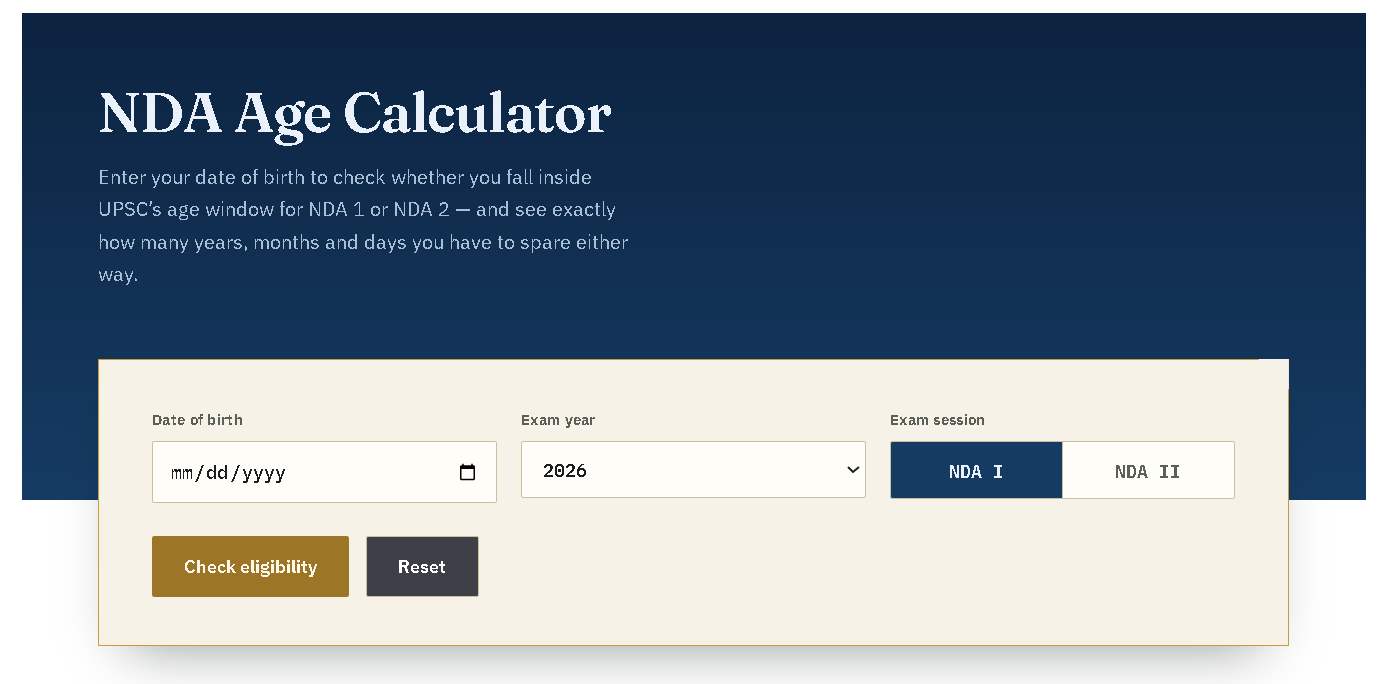
Planning to appear for the NDA exam starts with one important question: are you actually within the required age range? The NDA Age Calculator gives you a quick way to check your eligibility using your exact date of birth. Instead of manually comparing dates with the official requirements, you can get a simple result within seconds.
It helps you understand your NDA age limit, estimate your age on the examination date, and identify whether your date of birth fits the prescribed eligibility window. You can also use the result to plan future NDA attempts more effectively. However, the calculator should only be treated as an initial check. Always verify your final eligibility with the latest UPSC notification.
NDA Age Calculator 2026
from pathlib import Path
html = r”’
NDA Age Calculator 2026
NDA Age Calculator 2026
Check your age, NDA 2026 eligibility, exam-day age, and possible attempts using your exact date of birth.
NDA Age Eligibility
Your Age on Exam Day
Exam Date
Eligible DOB Range
Selected Examination
Current Age
Age Check
Eligibility Summary
Date of Birth
Exam Day
Minimum DOB
Maximum DOB
This calculator checks the age condition only. It does not confirm nationality,
educational qualification, marital status, physical or medical eligibility.
Always verify the complete requirements in the latest official UPSC notification.
The NDA age calculator gives you a quick way to check whether your birth date falls within the required range. Enter your exact NDA date of birth and select the relevant exam cycle. The result can help you understand your age, eligibility status, and possible examination opportunities.
Check Your NDA Age and Eligibility Instantly
Think of the calculator as a first checkpoint rather than a final decision. Your exact date of birth must match the document accepted by UPSC. The NDA eligibility calculator can simplify the comparison, while the final decision always comes from the applicable UPSC rules.
What Does the NDA Age Calculator Show?
A useful NDA age checker can compare your DOB with the prescribed age range. It can also show whether you appear eligible for a particular cycle. However, age alone doesn't establish complete eligibility. Education, nationality, marital status, and medical standards can also matter.
Calculator Check
What It Helps You Understand
Date of birth
Your age reference
Exam cycle
Applicable eligibility window
Age status
Whether your DOB fits
Attempts
Potential future opportunities
Final verification
UPSC notification
NDA Age Limit 2026: Check Your Eligibility
The NDA age limit 2026 depends on the specific examination notice. For NDA 2 2026, UPSC prescribed candidates born not earlier than January 1, 2008 and not later than January 1, 2011. The rule uses an exact date-of-birth range rather than simply asking whether someone is 17, 18, or 19.
NDA 1 and NDA 2 Age Requirements
Each exam cycle can have its own DOB boundaries. Therefore, you should never copy an old eligibility date into a new application. The safest approach is simple: check your DOB against the current UPSC NDA notification for the examination you want to enter.
NDA Cycle
2026 Examination Date
Age Eligibility Reference
NDA 1 2026
April 12, 2026
Check NDA I notification
NDA 2 2026
September 13, 2026
January 1, 2008–January 1, 2011
UPSC lists NDA 1 2026 as an April 12 examination and NDA 2 2026 as a September 13 examination.
Why Your Exact Date of Birth Matters
Being “18 years old” doesn't automatically prove NDA age eligibility. Two students with the same current age can have different eligibility results because their birthdays fall on different dates. For that reason, use the DOB shown on your Matriculation certificate when checking your application.
How to Calculate Your Age for the NDA Exam
A normal age calculation tells you how old you are today. NDA eligibility works differently because UPSC uses a prescribed DOB window for each examination. Your task is therefore to compare your birth date with the applicable boundaries instead of relying only on your current age.
Calculate Your Exact Age From Your Date of Birth
Start with the exact date of birth printed on your accepted educational record. Then select the NDA cycle you want to check. Compare that date with the official eligibility date range. If your DOB falls inside the range, you meet the age condition for that cycle.
Example of NDA Age Calculation
Suppose a candidate was born on January 1, 2009. For NDA 2 2026, that DOB falls inside the published range. A candidate born on January 2, 2011 falls outside it. This simple example shows why one day can change the result.
Example DOB
NDA 2 2026 Age Check
January 1, 2008
Within range
January 1, 2009
Within range
January 1, 2011
Within range
January 2, 2011
Outside range
The dates above follow the published NDA 2 2026 eligibility window.
NDA 2 2026 Important Dates and Vacancies
The NDA 2 2026 notification was released on May 20, 2026. UPSC lists September 13, 2026 as the examination date. The application deadline shown on the current UPSC examination page is June 11, 2026 at 6:00 PM. Since the exam has now taken place, these dates are useful mainly for understanding the 2026 cycle.
NDA 2 2026 Exam Dates
The NDA important dates help candidates plan applications, preparation, and later selection stages. UPSC's official page records the notification date, application deadline, and examination date. Always use UPSC for future dates because coaching websites may retain older schedules.
Event
NDA 2 2026 Date
Notification
May 20, 2026
Application deadline
June 11, 2026, 6:00 PM
Written exam
September 13, 2026
Course commencement
July 1, 2027
UPSC NDA 2 2026 official examination page
NDA 2 2026 Vacancies
The NDA vacancies for this cycle total 394 seats. They cover the Army, Navy, Air Force, and the 10+2 Cadet Entry Scheme at the Naval Academy. The vacancy distribution includes separate male and female figures. These numbers remain subject to the conditions stated in the notification.
Academy / Wing
Male
Female
Total
NDA Army
198
10
208
NDA Navy
37
5
42
Air Force Flying
90
2
92
Air Force Ground Duties, Technical
16
2
18
Air Force Ground Duties, Non-Technical
8
2
10
Naval Academy, 10+2 Entry
21
3
24
Total
370
24
394
The 394-seat distribution is reported for the NDA 2 2026 notification.
NDA Age Eligibility Rules You Should Know
Age is only one part of the NDA eligibility criteria. You must also satisfy conditions covering education, nationality, marital status, and other requirements. The safest strategy is to treat the calculator as an early screening tool. Then verify every condition in the current UPSC notice.
Date of Birth and Age Proof
UPSC relies on the DOB recorded in the Class 10 certificate or accepted equivalent educational record. Don't use a different date from a personal document simply because it seems more convenient. Your application should match the accepted record exactly.
Other NDA Eligibility Conditions
The eligibility criteria also cover nationality, marital status, education, and prescribed physical or medical standards. The rules can differ by entry or wing. Therefore, passing the age check doesn't automatically guarantee NDA eligibility.
Requirement
General Point
Date of birth
Must fit the prescribed range
Marital status
Unmarried candidates are required
Nationality
Must satisfy UPSC conditions
Education
Depends on the selected wing
Medical standards
Must satisfy prescribed requirements
The NDA 2 2026 eligibility information specifies the DOB window, unmarried status, education requirements, and nationality conditions.
How Many NDA Attempts Can You Get?
There isn't a separate numerical attempt limit like some competitive examinations have. Instead, your practical number of NDA attempts depends mainly on whether you remain eligible for upcoming examination cycles. Because NDA occurs twice yearly, your DOB determines how many cycles you can enter.
Is There a Fixed NDA Attempt Limit?
The important distinction is between an official attempt cap and an age-based opportunity. An NDA attempt checker can estimate your remaining chances by comparing your DOB with upcoming cycles. Still, each application requires you to satisfy all applicable conditions.
How to Estimate Your Remaining NDA Attempts
Start with your DOB. Next, examine each upcoming exam cycle and its published age window. Count only the cycles where you satisfy the complete eligibility conditions. This method is more reliable than assuming every student automatically receives four or five attempts.
Check
Why It Matters
Your DOB
Establishes age eligibility
Upcoming NDA cycle
Provides the relevant window
Education status
Confirms qualification
Other conditions
Confirms complete eligibility
Application status
Confirms whether you actually applied
The NDA attempts calculator should therefore be treated as an estimate rather than an official UPSC eligibility certificate.
NDA Educational Qualification and Other Requirements
Age eligibility doesn't tell the whole story. Your NDA qualification depends on the wing you choose. The Army Wing has a different academic requirement from the Air Force and Naval options. Understanding this early can prevent a frustrating surprise after months of preparation.
NDA Educational Qualification
For the Army Wing, candidates need the required Class 12 qualification under the 10+2 pattern. For the Air Force and Naval Wings, the requirement includes Physics Chemistry Mathematics. Candidates who are currently Class 12 appearing can also apply under the applicable rules.
Entry
Educational Requirement
Army Wing
Class 12 pass or equivalent
Air Force Wing
Class 12 with Physics, Chemistry and Mathematics
Naval Wing
Class 12 with Physics, Chemistry and Mathematics
Naval Academy 10+2 Entry
Class 12 with Physics, Chemistry and Mathematics
Other Requirements Before Applying
Your NDA application also depends on nationality and marital status. Candidates must meet the applicable UPSC conditions. They must also satisfy prescribed physical and medical standards. Therefore, don't treat the NDA educational qualification as the only requirement.
How to Use the NDA Age Calculator Step by Step
Using an NDA DOB calculator takes only a moment. The key is entering accurate information. A wrong year or day can produce a misleading result. Before you begin, keep your accepted educational document nearby so you can enter the same DOB shown there.
Enter Your Date of Birth
Enter your date of birth exactly as recorded on your NDA application form or accepted certificate. Check the day, month, and year carefully. Even a small typing error can shift your eligibility result into the wrong age window.
Select the NDA Exam Cycle
Next, select the relevant examination. An NDA eligibility calculatorshould compare your DOB with the rules for that specific cycle. Don't assume the same DOB range applies forever. UPSC can prescribe different boundaries for different examinations.
Check Your Possible Attempts
Finally, review the result with future cycles in mind. An NDA age checker can show whether you appear eligible for a particular examination. You should then verify the result against the latest official notification before submitting an application.
Step
What You Should Do
1
Enter your exact DOB
2
Choose the NDA cycle
3
Check the age result
4
Review possible attempts
5
Verify official UPSC rules
Why Checking NDA Age Eligibility Early Matters
Checking NDA age eligibility early can save months of wasted preparation. Imagine spending an entire study season preparing for a cycle only to discover that your DOB falls outside the permitted range. A quick eligibility check can prevent that unpleasant last-minute shock.
Avoid Missing Your Last Eligible Attempt
Your final opportunity can arrive quietly. The difference between two birthdays may determine whether a future exam cycle remains available. Checking early gives you time to understand your options, prepare documents, and plan your study schedule around realistic opportunities.
Plan Preparation Around Your Eligibility
A smart candidate checks age, education, and other conditions together. This creates a clearer preparation roadmap. You can identify whether you need the NDA written test, SSB preparation, or additional academic work before your next eligible cycle arrives.
Important: A calculator provides a quick eligibility check. The applicable UPSC notification remains the authoritative source for the examination.
NDA Age Calculator FAQs
These common questions cover the main searches around the NDA age calculator, age rules, attempts, and eligibility. Remember that rules can change between examination cycles. Always verify time-sensitive details against the latest UPSC notice.
What is the age limit for NDA 2026?
For NDA 2 2026, UPSC specified a DOB range from January 1, 2008 through January 1, 2011. The exact NDA age limit must always be checked against the notification for the specific cycle.
How many attempts are allowed for NDA?
There is no separate fixed numerical attempt cap. Your practical NDA attempts depend on your DOB and whether you continue meeting all eligibility conditions for future cycles.
Can I apply for both NDA 1 and NDA 2?
Yes, a candidate may apply for both cycles when eligible. However, each application has its own eligibility date and requirements. You must satisfy the rules applicable to each examination.
How is NDA age calculated?
NDA age eligibility is primarily determined by comparing your DOB with the official date-of-birth range for the relevant examination. Your current age alone doesn't establish eligibility.
Is there any age relaxation in NDA?
Don't assume that standard reservation rules create an automatic age extension. The applicable UPSC notification determines the age relaxation rules. Check the current notice before relying on any exemption.
Can girls apply for NDA?
Yes. The current NDA framework includes male and female candidates subject to the prescribed eligibility requirements and notified vacancies. The 2026 NDA 2 notification included female vacancies across the listed wings.
Can Class 12 students apply for NDA?
Yes. Class 12 appearing candidates can apply when they satisfy the applicable conditions. Students in Class 11 aren't eligible for the examination under the stated educational rules.
Which document proves my NDA date of birth?
UPSC uses the DOB recorded in the Matriculation certificate or an accepted equivalent certificate. You should enter the same DOB consistently in your application.
Does the NDA calculator guarantee eligibility?
No. An NDA age calculator is a screening tool. It can help you understand the age condition, but complete eligibility depends on every applicable UPSC requirement.
What is the educational qualification for NDA?
For the Army Wing, candidates need Class 12 or an equivalent qualification. The Air Force, Naval Wing, and Naval Academy 10+2 entry require Class 12 with Physics, Chemistry, and Mathematics.
What happens after the NDA written examination?
Candidates who qualify the written examination can proceed through the prescribed SSB process and subsequent medical requirements. The broader SSB selection process is therefore an important part of the route toward NDA admission.
Is NDA the same as the Naval Academy Examination?
They are included within the same UPSC examination notice but represent different training entries. The National Defence Academy covers Army, Navy, and Air Force training routes. The Naval Academy Examination includes the 10+2 Cadet Entry Scheme.
Where can I verify NDA 2026 information?
Use the official UPSC NDA 2 2026 examination page for the current cycle. For NDA 1 2026, use the UPSC NDA 1 2026 examination page. These sources should take priority over third-party summaries.
Final Takeaway
The easiest way to avoid an NDA eligibility mistake is to start with your DOB. Use the NDA age calculator, check the applicable NDA age criteria, then verify education and other requirements. Your calculator result is a useful first step. The official UPSC notice is the final checkpoint before you apply.
For the 2026 cycle, UPSC's official records show NDA 1 was scheduled for April 12, 2026 while NDA 2 was scheduled for September 13, 2026. The NDA 2 examination page also records the May 20 notification date and June 11 application deadline.
Before buying a sofa, bed, dining table, or any other piece, take a few minutes to measure room for furniture properly. A quick measurement can save you from expensive returns, awkward layouts, and furniture that blocks doors or walkways. Start by checking the room’s dimensions, including its length, width, and available floor space.
Then consider windows, doors, closets, outlets, and other fixed obstacles that may affect furniture placement. Accurate room measurements also help you compare your options with confidence. Whether you’re furnishing a small apartment or a spacious home, careful space planning ensures your furniture fits comfortably while leaving enough room to move, open doors, and use the space naturally.
Why Accurate Room Measurements Matter Before Buying Furniture
A furniture purchase can go wrong even when the room dimensions look generous. Imagine a large sectional that fits perfectly against one wall. Now imagine its chaise blocking the hallway. The piece technically fits, yet the room no longer works. Good measurements protect your budget while improving everyday comfort and room functionality.
More importantly, accurate measurements connect the room to the delivery process. Your sofa must pass through the entryway, doorway, hallway, and possibly a staircase before reaching its destination. Retailers such as Wayfair’s furniture measuring guide recommend checking these access points before buying large furniture. A few careful measurements can prevent a very expensive headache.
Measure for Fit, Function, and Delivery
Think of furniture planning as a three-part test. First, check whether the piece physically fits. Next, check whether people can move around it comfortably. Finally, confirm that the delivery team can get it inside. This approach turns basic measuring into practical space planning rather than simple arithmetic.
What You Need to Measure a Room for Furniture
You don’t need a toolbox full of gadgets. A reliable tape measure, pencil, paper, and phone are enough for most homes. A helper makes long measurements easier. A laser measure can speed up larger rooms, although you should manually verify important dimensions before ordering expensive or custom furniture.
Start by drawing a rough room sketch before measuring. Mark each wall and label doors, windows, closets, stairs, fireplaces, and built-in features. Record measurements immediately beside the correct feature. This simple habit keeps similar numbers from becoming mixed up later and gives you a useful floor plan for comparing furniture.
Keep Measurements Consistent
Use inches throughout your furniture research because most U.S. retailers list furniture dimensions that way. Record the length, width, height, and depth of important spaces and products. Also note the floor level condition, uneven walls, and anything that projects into the usable area. Consistency makes comparisons much easier.
How to Measure a Room for Furniture Step by Step
Start with the basic room measurements before thinking about furniture placement. Measure each wall from finished edge to finished edge at the floor level. Don’t assume opposite walls have identical measurements. Older homes can have slightly uneven construction. Record the wall span for every wall rather than relying on one overall number.
Next, measure the ceiling height and check unusual areas. Take a diagonal measurement if the room seems out of square. For rectangular spaces, multiply length by width to estimate square footage. However, remember that square footage doesn’t equal usable space because doors, furniture, closets, and fixed features consume part of the room.
Measure Irregular Rooms in Sections
An L-shaped room shouldn’t be treated like one rectangle. Divide the room shape into smaller rectangles or other simple sections. Calculate each section separately and combine the results. For furniture planning, however, the outline matters more than the total area. An odd corner can affect furniture placement even when the room has plenty of square footage.
Measure Doors, Windows, and Fixed Obstacles
Walls tell only part of the story. Your door opening, window, and closet positions can completely change the best furniture arrangement. Measure each opening from nearby corners and record its width and height. Also mark the door swing because an open door can occupy space you hoped to use for furniture.
Then record every fixed obstacle, including a baseboard, radiator, electrical outlet, vent, column, built-in cabinet, alcove, or wall projection. These details may look minor individually. Together, they can reduce usable depth or change where a sofa, bed, cabinet, or dining table can safely sit.
Don’t Ignore Vertical Obstacles
Height matters just as much as floor space. A tall cabinet may fit one wall but interfere with a window or ceiling fixture. Record the height of windows and built-ins along with the ceiling. This extra information becomes especially valuable when comparing tall bookcases, wardrobes, entertainment centers, and headboard designs.
How to Measure Furniture Before You Buy
Product listings usually provide width, depth, and height, but those numbers need context. Compare the listed furniture size with your available floor space. Then consider the entire furniture footprint, including arms, backs, legs, chaise sections, doors, drawers, and other extensions. Never judge a piece by width alone.
A useful trick is to create the furniture footprint with painter’s tape. Mark the exact dimensions on your floor. Then walk around the outline, open nearby doors, and check your normal walking path. This simple test shows problems that a product photograph cannot reveal. It also makes your planned furniture layout easier to visualize.
Test Operating Space Before Ordering
Furniture needs room to operate. A recliner needs space when extended. A dresser needs room for drawers. A dining chair needs space to pull away from the dining table. A sectional may need extra clearance around its chaise. Always measure the operating position, not only the closed position.
Furniture area
What to check
Sofa
Width, depth, back height, walkway
Sectional
Full configuration and chaise depth
Recliner
Extended operating space
Dining table
Chair movement and surrounding passage
Bed
Frame footprint and bedside access
Dresser
Drawer opening and walking space
How to Measure Entryways and Delivery Paths
Your furniture’s journey starts outside the room. Measure the complete delivery pathway, including the front door, interior doors, hallway clearance, corners, stairs, landings, and elevators. Wayfair also recommends accounting for handrails, doorknobs, trim, and hinges when measuring access points.
Pay special attention to a narrow doorway or tight turn. A large sofa might pass through a wide door when positioned straight. The same sofa could fail when rotated around a corner. Measure the door opening, nearby wall space, and turning area. These are critical doorway measurements for oversized furniture.
Measure Stairs and Elevators Too
For homes with multiple levels, complete your stairway measurements before ordering. Measure the staircase width, railing position, ceiling height, and landing dimensions. Apartments and condos require the same attention for an elevator. Include its door opening, interior dimensions, and available turning space. These details can determine whether delivery is practical.
How to Plan Furniture Layout and Spacing
Once measurements are complete, turn them into a simple floor plan. Place doors and windows first. Add permanent obstacles next. Then draw each furniture piece using its real dimensions. This creates a realistic room layout instead of relying on imagination. It also makes furniture planning easier when you want to compare several arrangements.
Good furniture clearance keeps a room comfortable. Major paths often work well around 30 to 36 inches wide, while secondary paths can sometimes use roughly 24 inches depending on traffic. These are planning ranges rather than universal rules. Your household, furniture type, and traffic flow should determine the final arrangement.
Build Around Real Daily Movement
Think about how you actually use the room. A route between the sofa and kitchen may receive constant traffic. A path toward a rarely used corner may need less space. Protect important walkways first. Then position furniture around them. This approach gives you better usable space and a more natural seating arrangement.
Planning area
Practical consideration
Main walkway
About 30–36 inches
Secondary path
Around 24 inches when appropriate
Recliner
Full operating extension
Dining area
Chair movement and passage
Bedside
Comfortable access
Drawers
Full opening clearance
How to Measure Bedrooms and Mattresses Correctly
Bedroom planning starts with bedroom measurements, not mattress shopping. Measure the walls, doors, closets, windows, and available walking space. Then compare your options using the actual mattress dimensions. Standard U.S. sizes include Twin, Twin XL, Full, Queen, King, and California King.
Remember that the mattress isn’t always the full bed footprint. A bed frame, headboard, rails, storage base, or footboard can extend beyond the mattress. For example, a standard King mattress measures 76 by 80 inches. A California King measures 72 by 84 inches.
Compare Standard U.S. Mattress Sizes
Mattress size
Approximate dimensions
Twin
38 × 75 inches
Twin XL
38 × 80 inches
Full
53 × 75 inches
Queen
60 × 80 inches
King
76 × 80 inches
California King
72 × 84 inches
These dimensions describe the mattress itself. The complete bed can require additional space depending on its frame and design.
Common Room Measurement Mistakes to Avoid
The most common mistake is measuring only the empty room. You need the openings, obstacles, and furniture operating areas too. Forgetting a door swing, closet, radiator, or built-in feature can create an awkward arrangement. Another mistake involves trusting a single measurement without checking it. Accurate measurements matter most where clearance is tight.
Another frequent problem occurs during delivery. Shoppers sometimes confirm the room dimensions but forget the route leading there. A sofa may fit beautifully once inside while failing at the front door. Measure the entire delivery route, especially stairs, corners, thresholds, and narrow passages. Technology can assist, but it shouldn’t replace careful verification.
Don’t Trust Apps Alone
Measurement apps can provide useful estimates during early furniture planning. However, phone-based measurements can vary because of camera positioning, lighting, reflective surfaces, or tracking errors. Use an app to create an initial plan. Then verify critical dimensions with a physical tape before making a major purchase.
Expert Tips and Final Measurement Checklist
The smartest approach is to verify three things before ordering: furniture fit, daily function, and delivery access. Check the piece’s dimensions against the room. Then test its footprint and operating space. Finally, trace the delivery route from the entrance to the final position. This process catches problems before they become expensive.
Keep your final floor plan with product dimensions and photographs of tight areas. Recheck the narrowest opening before ordering. Confirm unusual dimensions directly with the retailer. Most importantly, don’t confuse a large room size with unlimited usable space. Good measuring turns empty dimensions into a practical plan.
Final Measurement Reference
Measurement
Record before buying
Room
Length, width, height
Walls
Each wall span and irregularity
Doors
Width, height, swing
Windows
Width, height, sill position
Furniture
Width, depth, height
Bedroom
Bed footprint and access
Delivery
Entryway, hallway, stairs
Tight areas
Turns, thresholds, landings
Layout
Walkways and operating space
Quick rule: measure the room, measure the furniture, then measure the route between them. That simple sequence makes measuring a room far more useful. It helps you choose furniture that fits physically, works comfortably, and reaches its intended place without unpleasant surprises.
For mattress dimensions, the standard U.S. measurements above are supported by Casper’s mattress size guide. For delivery planning, Wayfair’s furniture measurement guide provides additional guidance on doors, hallways, stairs, and elevators.
Frequently Asked Questions
What is the 2/3 rule for furniture?
The 2/3 rule means furniture should generally occupy about two-thirds of the available space, leaving enough room for comfortable movement.
What size couch should I get for a 12×12 room?
For a 12×12-foot room, a couch around 72–84 inches wide usually works well while leaving space for tables and walkways.
Is a 15×15 living room considered large?
Yes, a 15×15-foot living room is generally considered a spacious or medium-to-large living area for most homes.
What is the 4 inch rule for furniture?
The 4-inch rule is a spacing guideline that suggests keeping roughly 4 inches between certain furniture pieces to create visual separation without wasting space.
What is the 3-5-7 rule in interior design?
The 3-5-7 rule encourages grouping decorative elements in odd-numbered arrangements, such as three, five, or seven items, for a balanced look.
What is the 2 2 1 rule for sofas?
The 2-2-1 sofa rule typically refers to arranging two sofas, two chairs, and one central focal element, creating a balanced conversational seating area.
A double boiler is one of those simple kitchen tricks that can save you from buying another gadget. It lets you heat delicate foods slowly without exposing them to harsh direct heat. You can create one at home using a saucepan and a heatproof bowl. The lower pan holds water while the upper bowl warms through indirect heat.
This setup works especially well for melting chocolate, making sauces, and handling other temperature-sensitive ingredients. You don’t need special cookware to get reliable results. With the right simmering water and careful heat control, your everyday kitchen tools can do the job. Once you understand the method, you’ll see why cooks have relied on it for generations.
What Is a Double Boiler and How Does It Work?
A double boiler is a two-part cooking setup designed for gentle heating. Usually, a bowl sits over a pot containing hot water. The bowl stays above the water while steam transfers heat upward. This method gives you better temperature control than placing delicate ingredients directly over a burner.
The basic idea is remarkably simple. Hot water creates steam, and steam heats the bowl from underneath. This provides gentle indirect heat for ingredients that react badly to sudden temperature changes. Unlike direct cooking, the method helps prevent overheating and makes it easier to work with fragile mixtures.
What Is a Double Boiler?
A traditional double boiler has a lower saucepan and an upper vessel. A heatproof bowl can replace the upper vessel when you don’t own dedicated cookware. Both setups rely on indirect heat to warm ingredients gradually without exposing them directly to a hot burner.
How Does a Double Boiler Work?
The lower pan holds water that produces steam as it heats. That steam heat warms the upper bowl and its contents. The result is controlled gentle heat that helps you melt ingredients slowly while reducing the chance of scorching.
Double Boiler vs. Water Bath
A double boiler keeps the food above the water. A water bath places the cooking container directly into hot water. Both methods provide gentle heating. However, they transfer heat differently and suit different recipes.
When Should You Use a Double Boiler?
A double boiler shines when direct stovetop heat feels too aggressive. It works particularly well with temperature-sensitive ingredients such as chocolate, egg mixtures, and delicate sauces. The gradual heating gives you more control and helps avoid direct heat when a recipe needs a softer cooking environment.
Chocolate is a classic example because chocolate can burn surprisingly easily. The technique also works for custards, meringue, and sauces where sudden heat can change texture. When a recipe calls for careful heating, a double boiler often provides a useful safety margin.
Melting Chocolate Without Burning It
For melting chocolate, place chopped chocolate in a dry bowl above gently heated water. Stir regularly as it softens. The goal is smooth chocolate melting, not aggressive boiling. King Arthur Baking found the double-boiler method effective for gradual chocolate melting with relatively low scorching potential.
Making Custards and Egg-Based Sauces
Egg-based recipes need patience because high heat can quickly scramble egg yolks. A double boiler gives you more gradual heating for custards and sauces. It also works well for hollandaise sauce, where controlled cooking helps protect the hollandaise emulsion.
Heating Egg Whites and Sugar
Some recipes gently heat egg whites and sugar before whipping. This technique can improve texture and help dissolve sugar evenly. For food safety, follow the recipe’s temperature instructions. USDA guidance recommends cooking egg mixtures to 160°F when a safe minimum cooking temperature applies.
How to Make a Double Boiler at Home
The easiest DIY double boiler setup needs only a medium-sized pot and a suitable bowl. Add roughly an inch or two of water to the pot. Then bring water to a simmer and place the bowl above it. The setup should remain stable throughout cooking.
Choose a bowl that fits securely without sitting inside the water. A heatproof glass bowl or metal mixing bowl usually works well when designed for cooking temperatures. King Arthur Baking similarly recommends keeping the bowl above simmering water during chocolate melting.
What You Need
You need a saucepan, a suitable mixing bowl, water, and a heat-safe spoon or spatula. A medium pot also works when its opening matches the bowl’s size. The upper vessel should sit securely without wobbling.
Step-by-Step DIY Double Boiler Method
Start by adding an inch or two of water to the saucepan. Heat it until gently simmering. Set the bowl above the pan and check that the water below the bowl never touches its base. Add your ingredients and stir as needed.
How to Choose the Right Bowl and Pot
The bowl should fit the pan comfortably. A stainless steel bowl transfers heat efficiently and handles stovetop cooking well. A suitable heatproof glass bowl can also work. Avoid unstable combinations that can tip or trap excessive steam around the cookware.
How to Use a DIY Double Boiler Correctly
Once your setup is ready, heat management becomes the main skill. Keep the burner at low heat or another setting that maintains a calm simmer. You don’t need a rolling boil. The purpose is steady gentle indirect heat, not maximum temperature.
Keep checking the water level during longer cooking tasks. The bowl should not touch water in a steam-based setup. Also watch for condensation because water droplets can cause problems with chocolate. These small details make the difference between smooth results and a kitchen headache.
How Much Water Should You Use?
Start with an inch or two of water unless your recipe says otherwise. You need enough water to generate steam throughout cooking. However, too much water can make the bowl sit too low and defeat the purpose of the setup.
Keep the Water at a Gentle Simmer
A strong boil creates unnecessary steam and movement. Instead, maintain simmering water that produces steady heat. If bubbles become aggressive, reduce the burner. This approach improves temperature control and reduces splashing.
Stir and Monitor the Ingredients
Stir delicate mixtures regularly when the recipe requires it. Watch the edges because they can heat faster than the center. When most ingredients have melted, remove the bowl and let residual heat finish the process.
Keep Water Away From Chocolate
Chocolate and stray moisture can be a troublesome pairing. Condensation or water droplets can cause melted chocolate to seize. Keep the bowl and utensils dry. Bon Appétit and King Arthur Baking both emphasize avoiding water contact during chocolate melting.
What Can You Use Instead of a Double Boiler?
You don’t need a dedicated pan to achieve controlled heating. A double boiler alternative can be as simple as a bowl positioned above a saucepan. This makes a double boiler substitute especially useful when you’re cooking in a small kitchen or working with limited cooking equipment.
The best alternative depends on your recipe. A heatproof bowl works for many tasks. A microwave may suit small chocolate batches. A water bath can help when a recipe specifically needs surrounding hot water. Choose the method that gives your ingredients the right amount of heat.
Heatproof Bowl and Saucepan
A heatproof bowl and pot combination is the most practical substitute for most home cooks. It uses ordinary kitchen equipment while providing controlled heating. Make sure the bowl remains stable and stays above the water during cooking.
Two Pots That Fit Together
Two compatible pots can create another form of double boiler method. The upper pot should rest securely without dipping into the water. This option works best when the cookware was designed to nest safely.
Microwave for Melting Chocolate
A microwave can be useful when you need to melt a small amount quickly. Heat chocolate in short bursts and stir between intervals. This avoids prolonged steam heat, although you still need careful temperature control to avoid overheating.
Water Bath vs. Double Boiler
A water bath surrounds the cooking container with hot water. A double boiler heats the container primarily through steam and indirect warmth. The distinction matters because some recipes depend on direct water contact while others specifically require the food to remain above it.
How to Make a Double Boiler Without Special Kitchen Equipment
A practical homemade double boiler doesn’t require expensive cookware. Your everyday saucepan and mixing bowl can often do the job. This approach also saves cabinet space because each piece remains useful for normal cooking after the project ends.
Before heating anything, test the setup while the cookware is cold. Make sure the bowl sits firmly and doesn’t wobble. Check that the base stays above the water. A stable arrangement is safer and easier to control than a makeshift stack.
Use the Cookware You Already Own
Look through your kitchen before buying anything. A suitable saucepan and metal mixing bowl may already provide everything you need. You can also use a cooking-safe glass bowl when the manufacturer allows that type of heating.
What If Your Bowl Touches the Water?
Reduce the water level if the bowl sits too low. The bowl should not touch water when you’re using a steam-based setup. If lowering the water doesn’t solve the problem, choose a larger bowl or different saucepan.
Best Setup for Small Kitchens
A homemade setup works particularly well in compact kitchens. You can use the same bowl for mixing, serving, or baking afterward. That flexibility makes a DIY double boiler more practical than storing a specialized pan for occasional recipes.
Safety Tips for Making and Using a Double Boiler
Safety starts with stable cookware and sensible heat. Use a bowl designed for high temperatures and keep handles away from the edge. Never assume a container is stovetop-safe simply because it can handle warm food. Materials behave differently under sustained heat.
Steam can burn just as easily as boiling water. Lift the bowl carefully and use oven mitts or suitable grips. If you’re cooking egg mixtures, follow the recipe’s food-safety directions rather than relying on visual texture alone. USDA recommends 160°F for many cooked egg mixtures.
Protect Yourself From Hot Steam
Steam escapes quickly when you lift the bowl. Move your hands away from the opening and lift slowly. Never lean directly over the pan. This small habit can help you avoid painful steam burns.
Keep Handles Away From the Edge
Position the saucepan handle where it won’t get bumped. Keep towels, packaging, and other loose items away from the burner. A tidy cooking area reduces accidental knocks while you’re handling hot cookware.
Use Heat-Safe Cookware
Choose a bowl specifically rated for cooking temperatures. A stainless steel bowl is a dependable option for stovetop use. If using glass, select a heatproof glass bowl intended for the conditions your recipe requires.
Never Leave the Setup Unattended
Stay nearby while water heats and ingredients cook. Check the water level during extended recipes. If the pan begins boiling aggressively, lower the heat. Good supervision keeps a simple technique from becoming an avoidable accident.
Double Boiler Recipes and Ingredients You Can Prepare
A double boiler has far more uses than melting chocolate. Bakers use it for sauces, custards, candy, and delicate mixtures. It can also help soften ingredients gradually. The common thread is simple: the food benefits from indirect cooking rather than harsh burner heat.
Ingredient or Recipe
Why Use a Double Boiler
Main Benefit
Chocolate
Gentle melting
Reduces scorching risk
cocoa powder mixtures
Controlled heating
Helps combine ingredients evenly
cream cheese
Gradual warming
Softens without direct burner heat
meringue mixtures
Controlled warming
Helps heat egg-white mixtures
hollandaise sauce
Gentle cooking
Supports a stable emulsion
chocolate fudge
Even heating
Reduces hot spots
brownies
Melting butter mixtures
Helps combine delicate ingredients
Melted Chocolate and Chocolate Desserts
When you melt chocolate, patience matters more than speed. Chop large pieces into smaller pieces before heating. The bowl’s residual warmth can finish the job after you remove it from the pan. This helps produce smooth melted chocolate without unnecessary heat.
Hollandaise and Other Delicate Sauces
A double boiler works well when sauces contain eggs or emulsions. With hollandaise sauce, excessive heat can scramble the eggs or destabilize the sauce. Gentle heating gives you time to whisk and respond before the mixture becomes too hot.
Custards, Lemon Curd, and Creamy Mixtures
Custards benefit from gradual heating because eggs can transform from silky to scrambled very quickly. The same principle applies to lemon curd and similar mixtures. Stir consistently and follow the recipe’s target temperature when one is provided.
Meringue and Egg-White Mixtures
For egg whites and sugar, gentle heating can help the sugar dissolve before whipping. Some recipes use this approach for meringue and related preparations. When food safety matters, use a thermometer and follow the recipe’s recommended endpoint.
Frequently Asked Questions About Double Boilers
A few questions appear again and again when people learn how to make a double boiler. Most come down to heat, water level, cookware, and ingredient choice. Understanding these details makes the technique far less intimidating for first-time cooks.
The key takeaway is simple. You don’t need fancy cookware to create controlled indirect heat. You need stable equipment, sensible water levels, and patience. Once you understand those basics, this old-fashioned technique becomes an easy tool for everyday baking and cooking.
Can I Make a Double Boiler With a Bowl and Pot?
Yes. A heat-safe bowl over a saucepan is one of the simplest ways to create a homemade double boiler. Keep the bowl stable and make sure the water stays below it.
Does the Bowl Need to Touch the Water?
No. For a standard steam-based setup, the bowl should not touch water. The rising steam provides the heat. Keeping the bowl above the water also reduces direct heat exposure.
Can I Use a Glass Bowl as a Double Boiler?
Yes, if the bowl is designed for the heat involved. A suitable heatproof glass bowl can work well. Always follow the manufacturer’s temperature and stovetop-use instructions.
How Much Water Goes in a Double Boiler?
Start with roughly an inch or two of water in the lower pan. Adjust the amount according to your cookware. The important point is keeping the water below the bowl throughout cooking.
Can I Use a Double Boiler to Melt Chocolate?
Absolutely. It’s one of the most common uses. Keep the heat gentle and make sure no steam or water enters the chocolate. Stir as it melts for an even texture.
What Is the Best Double Boiler Substitute?
For most home cooks, a double boiler substitute means a heatproof bowl placed securely over a saucepan. It provides the same basic indirect-heating principle without requiring dedicated cookware.
Why Did My Chocolate Seize in the Double Boiler?
Moisture is a common culprit. Condensation, wet utensils, or accidental splashes can make chocolate thick and grainy. Overheating can also damage its texture. Keep everything dry and use gentle heat.
Can I Use a Double Boiler on a Gas or Electric Stove?
Yes. Both can work with the right cookware. Control the burner carefully and maintain a gentle simmer. The goal isn’t a particular stove type. It’s consistent, controlled heat.
Do I Need to Buy a Dedicated Double Boiler?
Usually, no. If you already own a suitable bowl and saucepan, the DIY method can handle many recipes. A dedicated pan may offer convenience if you use this technique frequently. However, it isn’t essential for most home kitchens.
Final Thoughts
Learning how to make a double boiler can save money and valuable cabinet space. More importantly, it gives you a reliable way to handle delicate foods with gentle indirect heat. A saucepan, suitable bowl, water, and a little patience are often all you need.
Whether you’re preparing chocolate, custard, meringue, or sauce, focus on controlled heating rather than speed. Keep moisture away from chocolate, monitor egg mixtures carefully, and choose cookware that can handle the heat. Once you master this simple setup, you may never feel the need to buy a dedicated double boiler again.
A riser desk is a simple way to turn your existing desk into a more flexible standing workstation without replacing the entire setup. It sits on top of your current desk and lets you raise or lower your monitor, keyboard, and other essentials to a comfortable working level.
Unlike a fixed desk, a riser supports height adjustment, allowing you to switch between sitting and standing during the day. This makes it a practical desk converter for home offices, small workspaces, and shared desks. Whether you want better workspace flexibility or a more comfortable ergonomic workstation, a desk riser can help you create a setup that fits your working style.
What Is a Riser Desk?
A desk riser is a platform that sits on an existing desk and raises your computer equipment to a comfortable standing height. It can create a standing workstation without requiring you to replace your current furniture. In simple terms, it turns one desk into two working positions.
You may also hear terms such as desk converter, standing desk converter, standing desk riser, and desktop riser. These names usually describe similar products. Unlike a height-adjustable desk, however, the converter moves your equipment rather than the entire desk.
How Does a Desk Riser Work?
The basic idea is surprisingly simple. A riser uses a lifting mechanism to move its platform upward or downward. Depending on the model, that movement may come from a gas-powered piston, spring system, crank, or electric motor. The goal remains the same: create a comfortable ergonomic position for both seated and standing work.
Most models provide a specific height range and weight capacity. Those two specifications deserve close attention because your monitors, laptop, keyboard, speakers, and accessories all add weight. OSHA recommends arranging computer components so your body can maintain neutral positions while working.
Types of Desk Risers and Standing Desk Converters
The market includes several designs. A manual desk riser uses physical force, while an electric desk riser uses a motor for movement. A gas spring desk riser or pneumatic desk riser uses stored mechanical energy to make lifting easier.
You can also choose between a dual-tier desk riser and a single-tier desk riser. Larger setups may need a full-width desk riser, while apartments, dorms, and compact offices often benefit from a compact desk riser.
Type
Best suited for
Main advantage
Manual
Occasional use
Lower complexity
Gas spring
Frequent adjustment
Smooth movement
Electric
Frequent height changes
Push-button control
Single-tier
Laptops
Compact design
Dual-tier
Monitors and keyboards
Better separation
Full-width
Large setups
More usable space
Benefits of Using a Desk Riser
The biggest advantage is workspace flexibility. Instead of remaining in one sitting position for hours, you can alternate between sitting and standing throughout your day. That change can also encourage more workday movement, especially when you pair it with short walks and regular breaks.
A well-adjusted converter can support ergonomic benefits, better back comfort, and less awkward reaching. It may also reduce unnecessary neck strain and shoulder strain caused by poorly positioned equipment. Still, standing alone isn’t magic. OSHA recommends changing positions regularly rather than staying fixed in one posture.
Is a Desk Riser Necessary?
Not necessarily. A converter makes sense when you already like your desk but want more workspace flexibility. It can also suit renters, remote workers, and people who don’t want to replace existing office furniture. Think of it as an upgrade rather than a requirement.
The real question is whether your current setup creates problems. If prolonged sitting bothers you or you want more physical activity during work, a converter can help. Yet someone with a large multi-monitor setup may prefer a full standing desk because the entire surface moves together.
Desk Riser vs. Full Standing Desk: What’s the Difference?
The distinction comes down to what actually moves. A converter raises the equipment placed on it, while a full standing desk raises the entire work surface. That difference becomes important when you use several screens, heavy accessories, paperwork, or large desk-mounted equipment.
Feature
Desk Converter
Full Standing Desk
Existing desk
Yes
Usually replaced
Moving area
Converter platform
Entire desk
Installation
Usually simpler
More involved
Large equipment
Model dependent
Generally easier
Cost
Usually lower
Usually higher
Long-term use
Flexible upgrade
Complete workstation
A converter can therefore be a practical standing desk alternative. A full desk may make more sense when you’re building a long-term workstation from scratch.
Manual vs. Electric Desk Riser: Which Should You Choose?
A manual model keeps things straightforward. A mechanical lever or spring system provides the lifting force without requiring an outlet. A crank mechanism works differently because you turn a handle to change the platform height. These designs suit people who adjust positions occasionally.
An electric desk riser offers greater convenience. A motorized desk riser can provide push-button adjustment and, on some models, height presets. If you switch positions many times each day, that convenience can become valuable. Electric models usually cost more and require power.
Feature
Manual
Electric
Power
Not required
Required
Adjustment
Hand-operated
Button-operated
Convenience
Good
Excellent
Price
Often lower
Often higher
Frequent changes
Less convenient
Very convenient
How to Set Up and Use a Desk Riser Correctly
A good standing desk setup begins with your body, not the product. Set the screen so you can look forward without repeatedly bending your neck. OSHA recommends placing the top of the monitor at or below eye level and keeping the screen at a comfortable viewing distance. (OSHA)
Next, focus on keyboard positioning and monitor positioning. Your shoulders should remain relaxed, wrists straight, and elbows comfortably near your body. A suitable keyboard tray, external keyboard, or monitor stand can help when the built-in platform doesn’t fit your proportions.
Create an Ergonomic Desk Setup
Your ergonomic desk setup should let you work without constantly reaching, bending, or twisting. Keep frequently used desk accessories close to you and organize cables through simple cable management. An anti-fatigue mat may also improve comfort when standing for longer periods.
The goal isn’t to stand all day. Instead, use your workspace setup to change positions naturally. Mayo Clinic also emphasizes chair height, equipment spacing, and posture as important parts of office ergonomics.
Who Should Use a Desk Riser?
A converter can work especially well for remote employees, students, gamers, and professionals with limited space. It can also suit someone who wants a flexible home office setup without buying new furniture. For many users, the attraction is simple: keep the existing desk while gaining an adjustable workstation.
People with multiple monitors should pay closer attention to platform size and stability. Likewise, laptop users should consider an external keyboard and mouse because raising a laptop screen can also raise its keyboard. Good workspace ergonomics require the screen and input devices to work together.
Desk Riser Buying Guide: What to Look For
Before buying, measure your desk surface and check the converter’s dimensions. Then compare its height range, lifting method, and weight capacity with your equipment. A product that looks sturdy online may feel unstable when fully raised if it doesn’t match your setup.
Also check the keyboard area, monitor compatibility, base footprint, adjustment speed, and warranty. If you use a monitor arm, speakers, or other desk accessories, confirm compatibility first. A few minutes of measuring can prevent an expensive mismatch.
Buying factor
Why it matters
Height range
Determines usable sitting and standing positions
Weight capacity
Prevents overloading
Platform size
Determines equipment fit
Stability
Reduces unwanted movement
Mechanism
Affects adjustment effort
Monitor compatibility
Important for larger setups
Warranty
Adds purchase protection
Frequently Asked Questions About Desk Risers
What is a riser desk?
A desk riser is an adjustable platform placed on an existing desk. It raises your monitor, keyboard, and other equipment so you can work from a standing position without replacing the entire desk.
Are desk risers worth it?
They can be worthwhile if you want an affordable way to introduce sitting and standing into your workday. They’re especially useful when you like your existing desk or have limited space.
What is the difference between a desk riser and a standing desk?
A converter moves the equipment placed on its platform. A standing desk moves the entire desk. That makes a full desk more suitable when you need the whole surface available at both heights.
How high should a desk riser be?
There isn’t one universal number. Your ideal desk height depends on your body dimensions, chair height, monitor position, and keyboard placement. Your elbows should remain comfortable while your screen allows a neutral head position.
Are desk risers good for your back?
A converter can support better workstation positioning, but it isn’t a treatment for back problems. Proper setup, regular movement, and proper posture matter more than simply standing. OSHA recommends maintaining a neutral position and changing positions throughout the day.
Can I use a desk riser with two monitors?
Yes, provided the platform has enough space and suitable weight capacity. Check the manufacturer’s specifications carefully before adding monitor arms or other heavy equipment.
Is an electric desk riser better than a manual one?
Neither is automatically better. Manual models suit occasional adjustments and simpler setups. Electric models make frequent changes easier through powered movement and programmable settings.
Can a desk riser cause leg fatigue?
Standing for long periods can contribute to leg fatigue, especially when you stay in one standing position. Move regularly, shift your weight, and sit when needed rather than treating standing as the only healthy position.
Can you use a desk riser with a laptop?
Yes. However, raising the laptop screen can also raise the keyboard. An external keyboard and mouse can help you maintain better positioning while the laptop sits at a comfortable viewing height.
Final Thoughts
Choosing the right converter isn’t simply about finding the tallest platform. Your body, equipment, desk dimensions, and working habits all matter. A thoughtful ergonomic workstation should make movement easier without creating new positioning problems.
For occasional standing, a converter can be an effective standing desk alternative. For demanding setups, a complete adjustable desk may offer greater freedom. Either way, focus on comfort, adjustability, movement, and a workspace that fits the way you actually work.
Robots are becoming essential across manufacturing, healthcare, logistics, and research industries. However, moving these advanced machines safely requires more than standard packaging. Robotics Crating provides customized protection designed for industrial robots, AI systems, and automation equipment with complex structures and sensitive components. From robotic arms to humanoid machines, custom robotics crates help prevent damage caused by impact, vibration, moisture, and improper handling.
These engineered solutions use specialized materials such as foam inserts, reinforced structures, and protective barriers to ensure secure transportation. Whether shipping locally or internationally, professional robotic equipment packaging helps companies protect valuable technology throughout every stage of delivery.
What Is Robotics Crating?
Robotics crating is the process of designing and building custom packaging systems for robots and automation equipment. Unlike standard wooden boxes, these crates consider the robot’s dimensions, movement points, weight distribution, and fragile components. The goal is to create secure protection throughout shipping, handling, and storage.
Companies use custom robotics crates for expensive machines that require precise handling. These include manufacturing robots, AI-powered machines, laboratory systems, and humanoid robot shipping crates. Each crate is engineered to reduce risks caused by vibration, impact, moisture, and improper handling.
A professional robotics crate usually combines strong structural materials with specialized interior protection. These systems may include reinforced wood frames, foam supports, protective barriers, and secure anchoring points.
Standard Packaging
Robotics Crating
General size and shape
Designed around robot dimensions
Limited protection
Engineered impact protection
Basic materials
Advanced foam and stabilization systems
Suitable for simple equipment
Built for sensitive robotic systems
Because robots often contain expensive components, engineered protection systems help companies avoid repair costs, production delays, and calibration problems after shipping.
Why Industrial Robots Require Custom Crating
Industrial robots require specialized packaging because their design creates unique transportation challenges. A robotic arm may have several joints, uneven weight distribution, and fragile electronic parts. A standard crate cannot provide enough stability during movement.
The main purpose of protecting robots during transit and storage is preventing damage before the machine reaches its final location. Even small impacts can affect calibration, sensor accuracy, or mechanical alignment.
Advanced robotic systems often include cameras, sensors, processors, and controllers. These parts need sensitive electronics protection because exposure to shock, static electricity, or moisture can cause failures.
Common risks during robot transportation
Risk
Possible Damage
Vibration
Misalignment of mechanical parts
Impact
Broken sensors or damaged joints
Moisture
Corrosion and electronic failure
Poor support
Movement inside the crate
Static electricity
Electronic component damage
For this reason, companies use robot packaging solutions for safe transportation that match the exact requirements of each machine.
Robotics Equipment That Can Be Crated
Robotics crating applies to many types of automated equipment. As robotics expands into manufacturing, healthcare, defense, and logistics, specialized packaging has become increasingly important.
Industrial manufacturers often require robotic equipment packaging for robotic arms, welding systems, assembly machines, and complete production cells. Research organizations may need secure R&D equipment shipping solutions for experimental robots and prototypes.
Some common examples include:
Equipment Type
Crating Requirement
Industrial robotic arms
Joint stabilization and heavy-duty support
Humanoid robots
Body-shaped protection and balance control
Collaborative robots
Lightweight but secure packaging
Robotic cells
Large custom structures
AI robots
Sensor and electronics protection
Laboratory robots
Precision handling
The demand for shipping crates for humanoid robots is increasing as companies develop robots for warehouses, healthcare, customer service, and defense applications.
Humanoid systems require special attention because their body shape creates unusual packaging needs. Professional providers create custom crates designed for humanoid robots by considering arms, legs, head clearance, and sensitive internal systems.
How the Robotics Crating Process Works
Creating a robotics crate starts with understanding the equipment. Specialists first inspect the robot and collect measurements. They evaluate weight, dimensions, lifting points, fragile areas, and transportation requirements.
The next stage involves custom packaging based on robot dimensions. Engineers design the crate structure around the machine rather than forcing the robot into a standard container.
For humanoid robots, designers focus on head clearance and limb stabilization. They also consider center of gravity protection for robots because unstable positioning can increase movement during shipping.
The typical process includes:
Step
Purpose
Equipment assessment
Understand robot requirements
Measurement
Create accurate crate dimensions
Design engineering
Develop structural protection
Interior fitting
Add foam and supports
Securing equipment
Prevent movement during transport
Final inspection
Confirm shipping readiness
Interior protection often includes precision foam inserts for humanoid robots. These inserts hold delicate sections while preventing unnecessary pressure on joints and sensors.
A well-designed crate also supports safe handling of humanoid robots during logistics by including lifting points, access panels, and loading features.
Protective Materials Used in Robotics Crating
Robotic equipment requires advanced protective materials because many components are sensitive. Crate builders select materials based on weight, fragility, electronics, and transportation conditions.
Precision foam inserts are among the most common solutions. They create a customized protective layer around robotic parts. These inserts prevent movement and reduce impact forces.
Different foam materials provide different benefits:
Material
Purpose
Closed-cell polyethylene foam
Durable impact protection
Crosslinked PE foam
Smooth protection for sensitive surfaces
Urethane foam padding
Soft support for lightweight parts
ESD-safe foam
Protects electronics from static
Robot shipping crates with foam protection often combine structural strength with internal cushioning. This approach creates better protection than using wood alone.
For electronic-heavy systems, companies use ESD-safe packaging for robotic electronics. Anti-static materials prevent electrical discharge that may damage sensors, processors, and control systems.
Moisture protection is also important. Moisture-resistant robot packaging uses barriers and protective layers to reduce corrosion risks during long-distance transportation.
Export Crating for Robotics and Automation Equipment
International robot shipments require additional preparation. Export transportation exposes equipment to longer travel times, changing climates, humidity, and repeated handling.
Companies use export shipping crates designed according to international requirements. These crates often include treated wood, reinforced structures, and moisture-control solutions.
For global shipments, packaging specialists consider:
Factor
Importance
Export regulations
Avoid customs delays
Moisture protection
Prevent corrosion
Strong construction
Handle long transport routes
Documentation
Support international delivery
Large robotics companies often require robotics shipping services that include both packaging and export preparation. This creates a smoother process from factory floor to final destination.
For defense, manufacturing, and international deployments, robotics packaging for manufacturing and defense requires higher protection standards because equipment value and operational importance are significant.
On-Site Robotics Crating Versus Off-Site Crating
Companies can choose between building crates at their facility or sending equipment to a professional packaging location. The right option depends on robot size, location, and project requirements.
On-site crating works well for large machines that are difficult to move. Specialists can build the crate around the robot while it remains inside the facility.
Off-site services may provide better access to advanced tools, materials, and controlled packaging environments.
On-Site Crating
Off-Site Crating
Less equipment movement
Professional packaging facilities
Good for large robots
Better for repeated production
Faster site preparation
More controlled engineering
Many companies prefer modular reusable robot crates because they reduce long-term costs. These systems can support multiple shipments and future deployments.
Knockdown crates for field deployment are also useful for companies transporting robots to different locations. They can be stored efficiently and assembled when required.
Shipping Methods for Crated Robotic Equipment
The transportation method affects crate design. A robot shipped by air requires different protection compared with equipment transported by ocean freight.
Companies use various methods depending on distance, urgency, and equipment value.
Shipping Method
Best Use
Truck freight
Domestic transportation
Air freight
Fast international delivery
Ocean freight
Large overseas shipments
Dedicated transport
High-value robotics
Professional robot transportation solutions include secure loading, lifting, tracking, and handling procedures.
During transportation, crates require impact absorption during transportation because sudden movement can affect internal components. Strong packaging ensures damage-free robotic equipment transport from departure to installation.
Robotics Crating Costs and Factors Affecting Pricing
The cost of robotics crating depends on several factors. There is no single price because every robot has different requirements.
Important pricing factors include:
Factor
Impact
Robot size
Larger crates require more material
Weight
Heavy systems need stronger structures
Protection level
Advanced materials increase cost
Shipping method
International transport requires extra preparation
Custom design
Engineering increases complexity
Companies investing in high-value robotic system protection often consider custom crates a necessary expense rather than an optional service.
Reusable designs can reduce future costs. Reusable packaging for multiple robot shipments helps organizations save money when transporting similar equipment repeatedly.
Choosing a Robotics Crating Company
Selecting the right provider is essential because poor packaging can damage expensive robotic systems. A reliable company should understand robotics, engineering, transportation risks, and specialized materials.
Look for providers with experience in:
Capability
Why It Matters
Custom crate engineering
Creates accurate protection
Robotics experience
Understands machine sensitivity
Foam design
Protects delicate components
Export knowledge
Supports international shipping
A professional provider should offer robot crate engineering and design instead of simply building standard wooden boxes.
The best companies create specialized packaging for complex robotics systems by combining structural engineering, protective materials, and careful handling procedures.
As robotics continues expanding, demand for industrial-grade robotic transportation packaging will continue growing. Advanced machines need equally advanced protection systems.
Frequently Asked Questions About Robotics Crating
Why do robots need custom crates?
Robots require custom crates because their size, weight, electronics, and mechanical parts create unique transportation challenges. Standard packaging cannot provide enough protection.
Can humanoid robots be shipped safely?
Yes. With properly designed shipping crates for humanoid robots, companies can safely transport advanced robotic systems using specialized supports, foam inserts, and stabilization methods.
What materials protect robots during shipping?
Common materials include wood, custom foam-lined wooden crates, anti-static foam, moisture barriers, and precision-cut cushioning systems.
Are robotics crates reusable?
Many robotics crates can be reused. Reusable shipping crates and modular designs help companies reduce packaging costs during repeated deployments.
Why is foam important in robotics packaging?
Foam protects sensitive parts by reducing movement, absorbing impact, and supporting fragile components such as sensors, joints, and cameras.
Do AI robots require special packaging?
Yes. AI and automation equipment protection requires attention to electronics, sensors, processors, and communication systems because these components are highly sensitive.
Conclusion
Robotics crating has become an essential part of modern automation logistics. As robots become more advanced, their transportation requirements become more complex. Custom-designed crates provide the stability, protection, and reliability needed for safe movement.
From industrial machines to humanoid robots, professional packaging solutions help companies protect valuable technology. With engineered designs, specialized materials, and careful handling, robotics crating supports the future of automation without unnecessary transportation risks.
Choosing the right SBOM tool can shape how well your team finds, tracks, and manages software risk. In 2026, the debate around Trivy vs Syft vs Dependency-Track matters because each platform solves a different problem. Syft focuses on detailed SBOM generation, Trivy combines inventory with CVE scanning, and Dependency-Track supports ongoing SBOM management across many products.
The best option depends on your pipeline, compliance needs, and security maturity. This guide compares accuracy, formats, VEX support, integrations, and operational effort. By the end, you’ll understand which tool fits each stage and how to build a stronger software supply-chain security workflow without adding needless complexity for modern development and enterprise security teams.
Trivy vs Syft vs Dependency-Track: The Short Answer
Choose Syft when detailed inventory creation is your main goal. Choose Trivy when you need one CLI for inventory and scanning. Choose Dependency-Track when your organization needs centralized SBOM management, historical analysis, policies, and portfolio-wide risk visibility.
For many teams, the best answer isn’t one product. A practical Syft Trivy Dependency-Track stack generates accurate inventory, scans releases before deployment, and monitors published components afterward. Each tool handles a different stage instead of duplicating the entire workflow.
When to choose Syft
The answer to when to choose Syft starts with specialization. Anchore Syft focuses on package discovery and SBOM output. It scans container images, directories, files, and archives while using dedicated catalogers for many languages, operating systems, and binary types.
When to choose Trivy
The answer to when to choose Trivy is broader. Trivy generates CycloneDX or SPDX inventories and scans images, filesystems, repositories, Kubernetes targets, and existing SBOMs. It suits teams already using Aqua Security tooling or wanting one streamlined pipeline command.
When to choose Dependency-Track
The answer to when to choose Dependency-Track centers on scale. OWASP Dependency-Track ingests CycloneDX documents and tracks components across every version of every project. It continuously evaluates security, license, integrity, and policy risks.
Which is better Syft or Trivy?
The question which is better Syft or Trivy depends on your task. Syft is usually the clearer dedicated generator. Trivy offers the cleaner all-in-one experience when you also need CVE scanning, license checks, repository analysis, or container security controls.
Trivy vs Dependency-Track
A Trivy vs Dependency-Track comparison isn’t truly head-to-head. Trivy usually operates during development and release pipelines. Dependency-Track remains active after upload, preserving project history and reassessing components when new vulnerability information appears.
Syft vs Dependency-Track
Likewise, Syft vs Dependency-Track compares a generator with an SBOM analysis platform. Syft creates the component record. Dependency-Track consumes that record and turns it into an ongoing security, governance, and reporting process.
What an SBOM Actually Is and Why It Matters
A Software Bill of Materials is a machine-readable inventory of software components and their relationships. CISA describes an SBOM as a key building block for software security and supply-chain risk management. NIST highlights transparency, provenance, and faster vulnerability response.
However, an SBOM doesn’t prove that software is safe. It shows what may be present. Teams still need vulnerability management, exploitability analysis, remediation ownership, secure builds, testing, configuration controls, and incident response.
What is an SBOM?
The question what is an SBOM is easiest to answer through an ingredients-label analogy. It records packages, versions, suppliers, relationships, identifiers, and other metadata. This component inventory gives producers and customers clearer visibility into software composition.
What information does an SBOM contain?
The answer to what information does an SBOM contain varies by standard and tool. Useful records may include names, versions, Package URLs, CPEs, hashes, suppliers, licenses, dependency paths, creation details, and the primary application or artifact.
What are direct and transitive dependencies?
The question what are direct and transitive dependencies matters because manifests rarely tell the whole story. Direct dependencies are intentionally added by developers. Transitive dependencies enter through those packages, often several levels deep.
SBOM generation, scanning, and management
These three stages shouldn’t be confused. Generation discovers software. Dependency scanning matches identified components with known security records. Management retains product versions, decisions, policies, and trends. A mature program connects all three stages.
Stage
Primary question
Typical tool
SBOM generation
What components exist inside this artifact?
Syft or Trivy
software composition analysis
Which components may carry known risks?
Trivy, Grype, or commercial SCA tools
SBOM aggregation
Which products use each component?
Dependency-Track
portfolio analysis
Where does one vulnerability affect the organization?
Dependency-Track
compliance reporting
Can we demonstrate inventory, policies, and decisions?
Dependency-Track or a commercial platform
CycloneDX vs SPDX
The CycloneDX vs SPDX decision should follow consumer needs. CycloneDX offers deep supply-chain and vulnerability capabilities, including native VEX models. SPDX is an ISO-recognized standard with profiles covering software, licensing, security, build, data, and AI information.
Which SBOM format should I use?
For which SBOM format should I use, choose CycloneDX for security workflows when your downstream platform expects CycloneDX-native vulnerability or VEX data. Choose SPDX for license compliance when contracts, legal review, or downstream consumers require SPDX’s licensing model.
Why U.S. organizations care
U.S. federal software-security efforts accelerated through US Executive Order 14028 and related NIST and CISA guidance. The order strengthened expectations for software transparency, secure development, and vulnerability response within federal procurement and supply chains.
Trivy vs Syft vs Dependency-Track Comparison Matrix
This Trivy vs Syft vs Dependency-Track comparison shows why a single ranking can mislead. The tools address related problems but operate at different layers. The best result comes from matching each capability with your actual engineering and governance needs.
When asking which SBOM tool is best in 2026, compare component detection, format fidelity, vulnerability matching, VEX, integrations, maintenance, policy controls, and ownership. Don’t choose based only on the number of findings displayed.
Capability
Syft
Trivy
Dependency-Track
Primary function
Dedicated generator
Generator and security scanner
Persistent analysis and governance platform
Typical stage
Build or release
Commit, build, release, or deployment
Post-build and continuous operations
container image scanning
Inventories container contents
Inventories and scans containers
Analyzes uploaded inventories
filesystem scanning
Yes
Yes
Not a direct scanning target
Git repository scanning
Source and directory cataloging
Repository scanning supported
Receives generated BOMs
Kubernetes security
Inventory-focused use
Kubernetes and KBOM scanning
Portfolio and policy analysis
CycloneDX JSON
Output supported
Output and input supported
Native ingestion and production
SPDX JSON
Output supported
Output and input supported
Not its native ingestion standard
Native VEX management
Limited generator role
Can consume supported VEX information
Strong CycloneDX VEX workflow
Vulnerability matching
Pair with Grype or another scanner
Built in
Continuous correlation
license metadata
Included where detected
Scanning and classification available
License analysis and policies
policy engine
No central engine
Pipeline and Rego-based controls
Expression and vulnerability policies
Historical projects
No
No central portfolio by default
Yes
continuous monitoring
No
Requires scheduled rescanning
Core platform capability
Operational model
CLI or container
CLI, container, or server workflow
Persistent multi-user platform
Syft supports CycloneDX, SPDX, and native Syft JSON outputs. Trivy generates standard SBOMs and scans supported CycloneDX and SPDX inputs. Dependency-Track is CycloneDX-native and focuses on persistent component intelligence.
Best open-source SBOM generator
There isn’t a universal best open-source SBOM generator for every stack. Syft often fits teams prioritizing detailed cataloging. Trivy may win when operational simplicity matters more than using a specialized generator.
Best SBOM management platform
Among these three products, Dependency-Track is the clear best SBOM management platform candidate because centralized management is its core purpose. However, organizations should test scalability, identity integration, database operations, and reporting requirements before standardization.
Best SBOM tools for DevSecOps
The best SBOM tools for DevSecOps support automation without creating an abandoned compliance artifact. Your selected tools should integrate with builds, preserve artifact identity, apply policies, trigger remediation, and support later investigations.
SBOM Generation Accuracy, Coverage, and Format Support
Accuracy involves more than finding the largest number of packages. Good SBOM package detection accuracy means correct names, versions, ecosystems, identifiers, licenses, relationships, and evidence. Duplicate or wrongly matched packages can make a larger SBOM less useful.
Any credible SBOM generation accuracy comparison must test real workloads. Java archives, Python environments, Go binaries, npm applications, Linux packages, and containers expose different blind spots across package ecosystems and package managers.
How Syft generates SBOMs
Understanding how Syft generates SBOMs starts with catalogers. Syft uses specialized modules for declared packages, installed packages, operating-system packages, language files, archives, and binaries. This modular model supports broad discovery and configurable scanning.
Syft package ecosystem coverage
Strong Syft package ecosystem coverage comes from dozens of catalogers spanning Python, Java, Go, JavaScript, Ruby, Rust, DEB, RPM, APK, and other formats. However, real accuracy still depends on scan target, package evidence, and configuration.
Richest SBOM metadata
The phrase richest SBOM metadata shouldn’t become an unsupported marketing verdict. Syft’s native JSON can preserve tool-specific evidence that standardized outputs may not represent fully. Teams should compare required fields rather than file size alone.
How Trivy generates SBOMs
The answer to how Trivy generates SBOMs involves applying its package-detection logic to images, filesystems, repositories, or root filesystems. Trivy can then produce standard output while optionally running security scanners through related commands.
Trivy SBOM generation and vulnerability scanning
The value of Trivy SBOM generation and vulnerability scanning lies in consolidation. One tool can identify packages, create inventory, and evaluate vulnerabilities. However, Trivy warns that scanning third-party SBOMs may lose accuracy when its expected custom properties are absent.
Does Dependency-Track generate SBOMs?
For does Dependency-Track generate SBOMs, the practical answer is generally no at build time. Dependency-Track expects CycloneDX documents produced by pipelines or suppliers. It then ingests, analyzes, stores, and governs those inventories.
Source scan versus final artifact
Source manifests may contain build tools or test packages absent from production. Final images may contain operating-system packages missing from source declarations. Therefore, build artifacts should usually receive their own inventory before release.
How to validate CycloneDX SBOMs
To understand how to validate CycloneDX SBOMs, check schema validity, root component identity, package URLs, versions, hashes, relationships, and required organizational fields. SBOM validation should also compare the document with the actual release artifact.
How to convert SBOM formats
The answer to how to convert SBOM formats requires caution. Syft provides experimental SBOM conversion between supported standards but warns that information may be lost. Conversion should include field-by-field validation before compliance or security use.
Best tool for CycloneDX generation
The best tool for CycloneDX generation depends on your ecosystem. Syft and Trivy both produce CycloneDX. Language-specific CycloneDX tools or CycloneDX CLI utilities may provide deeper standard-specific validation or manipulation in selected workflows.
Best tool for SPDX generation
The best tool for SPDX generation must support the version and fields your consumer expects. Syft and Trivy both generate SPDX, but organizations should test whether relationships, licensing details, hashes, and application metadata survive downstream processing.
Vulnerability Detection, Monitoring, and Risk Prioritization
An SBOM identifies components, while a scanner performs vulnerability correlation. Matching quality depends on Package URLs, CPEs, versions, operating-system context, advisory sources, and vendor fixes. The same inventory can produce different results across vulnerability databases.
Effective risk prioritization requires more than severity. Teams should combine CVSS, exploit probability, exposure, asset value, fix availability, deployment status, and reachability. High numbers without context create alert fatigue rather than safer software.
How CVE correlation works
The question how CVE correlation works begins with identifiers. A scanner maps component coordinates against advisory records from sources such as NVD, GitHub Advisories, OSV, vendor feeds, or OSS Index. Incomplete identifiers can create missed or incorrect matches.
Trivy for CVE scanning
Using Trivy for CVE scanning provides fast feedback across images, filesystems, repositories, Kubernetes environments, and SBOM files. Trivy maintains vulnerability data from operating-system and language-specific sources.
How Dependency-Track analyzes SBOMs
The answer to how Dependency-Track analyzes SBOMs includes component matching, recurring intelligence updates, policy checks, license evaluation, and project impact analysis. The platform supports several internal and external intelligence sources.
Dependency-Track for continuous monitoring
Dependency-Track for continuous monitoring matters after deployment. Newly disclosed vulnerabilities can affect old releases without changing their SBOM. Dependency-Track re-evaluates stored inventories as its vulnerability intelligence changes.
CVSS and EPSS
CVSS estimates technical severity. EPSS estimates the probability of exploitation activity. Dependency-Track integrates EPSS to improve prioritization. Neither score alone replaces environmental context or analyst judgment.
What is VEX in software security?
The question what is VEX in software security refers to Vulnerability Exploitability Exchange. VEX communicates whether a known vulnerability affects a product in its specific context. It may record affected, not affected, fixed, or under-investigation states.
How VEX reduces false positives
Understanding how VEX reduces false positives requires precision. VEX doesn’t erase a CVE. It adds product-specific analysis showing why vulnerable code may be unreachable or absent. This supports false-positive reduction without hiding the original evidence.
How to create VEX attestations
For how to create VEX attestations, organizations need a documented decision, product identity, vulnerability reference, status, justification, evidence, author, and timestamp. VEX attestations should receive technical review and periodic reassessment.
How Dependency-Track manages VEX
The phrase how Dependency-Track manages VEX covers CycloneDX VEX ingestion, production, auditing, and portfolio analysis. Dependency-Track supports VEX alongside vulnerability disclosure reports and permanent finding records.
Best tool for VEX management
Among the three, Dependency-Track offers the strongest case as the best tool for VEX management because it maintains long-lived product context and audit history. Trivy can consume supported VEX information during scanning but isn’t a centralized VEX governance platform.
How to prioritize SBOM vulnerabilities
For how to prioritize SBOM vulnerabilities, combine severity, exploit probability, internet exposure, reachable functionality, asset criticality, compensating controls, and patch availability. This approach makes threat intelligence actionable rather than decorative.
How to reduce SBOM vulnerability noise
The answer to how to reduce SBOM vulnerability noise includes accurate identifiers, vendor-aware matching, deduplication, VEX, supported-version checks, and evidence-based suppression. Avoid blanket exclusions because they conceal genuine risk.
CI/CD Integration, Deployment, and Operational Complexity
CLI-based DevSecOps tools fit pipelines quickly. However, a central platform brings databases, authentication, upgrades, backup, monitoring, and retention obligations. Your tool decision must include ownership and operational cost, not only installation speed.
Strong CI/CD pipeline security connects inventory to the exact artifact being shipped. The workflow should fail safely when critical evidence is missing while allowing documented exceptions through controlled policy enforcement.
How to generate an SBOM in CI/CD
The process for how to generate an SBOM in CI/CD should run after creating the final release artifact. Scan the image, package, or binary that production will use. Assign immutable version and digest information before storing the result.
How to add SBOM generation to a pipeline
For how to add SBOM generation to a pipeline, define the generator version, target, format, naming convention, retention location, validation rules, and failure behavior. Unpinned tools can change output unexpectedly between builds.
Syft for SBOM generation
Using Syft for SBOM generation works well when teams want dedicated inventory output. Syft is distributed as a standalone CLI and supports container images, directories, files, archives, registries, and several standard formats.
How to scan an SBOM for vulnerabilities
For how to scan an SBOM for vulnerabilities, Trivy accepts CycloneDX, SPDX, SPDX JSON, supported attestations, and Kubernetes BOMs. It performs vulnerability scanning by default and can add license scanning.
How to upload SBOMs to Dependency-Track
The answer to how to upload SBOMs to Dependency-Track involves its REST API, CI integrations, or web interface. Projects should use stable names and unique versions so each release remains traceable.
How to manage SBOMs at scale
For how to manage SBOMs at scale, centralize project ownership, version history, access control, retention, policy rules, and alerts. Dependency-Track portfolio management supports project hierarchies, time-series metrics, vulnerability auditing, and cross-project searches.
Dependency-Track policy engine
The Dependency-Track policy engine evaluates component and vulnerability conditions. Version 5 adds expression-based policies and stronger operational scaling. Teams can connect failures to pipeline decisions, notifications, or remediation workflows.
Best tool for policy enforcement
Dependency-Track is the strongest best tool for policy enforcement candidate within this comparison. Trivy can enforce pipeline outcomes and Rego-based ignore policies. Dependency-Track adds centralized rules, project context, audit trails, and portfolio governance.
The 2026 Reference SBOM Workflow
A mature SBOM workflow for 2026 starts during the build but continues throughout the product lifecycle. It links source, artifact, inventory, vulnerability results, signatures, release records, monitoring, and remediation.
The ideal reference SBOM workflow creates supply-chain transparency without generating unmanageable paperwork. Automation should produce evidence. Human review should handle exceptions, exploitability decisions, and risk acceptance.
Stage
Action
Recommended capability
1
Build the final software artifact
Reproducible build controls
2
Generate CycloneDX or SPDX inventory
Syft or Trivy
3
Validate identity and required metadata
Schema and custom validation
4
Run vulnerability and license checks
Trivy or another scanner
5
Sign or attest the inventory
Cosign and Sigstore
6
Store evidence beside the artifact
Registry or immutable evidence store
7
Upload CycloneDX to Dependency-Track
API-based SBOM ingestion
8
Apply policies and triage findings
Policy engine and VEX
9
Monitor newly disclosed vulnerabilities
Continuous analysis
10
Trigger tickets, rebuilds, and reports
Integrated response workflows
How to sign an SBOM with Cosign
For how to sign an SBOM with Cosign, generate the inventory and attach it as an attestation to the relevant image. Trivy documents CycloneDX and SPDX attestation workflows using Cosign and Sigstore.
How to store SBOMs as OCI artifacts
The method for how to store SBOMs as OCI artifacts should preserve the relationship between each inventory and its exact image digest. OCI artifacts and registry attestations can keep release evidence close to the software they describe.
Signed SBOMs and software attestations
Signed SBOMs help verify integrity and publisher identity. They don’t prove inventory completeness. Strong software attestations should connect the build, artifact digest, tool version, subject, predicate, and signing identity.
How to verify SBOM signatures
For how to verify SBOM signatures, validate the signer, trust policy, artifact digest, attestation type, and transparency record before using the SBOM. Signature verification without identity policy provides limited assurance.
How to prevent unsigned software deployments
The answer to how to prevent unsigned software deployments involves registry controls and cluster policy. Deployment systems should reject artifacts lacking trusted signatures or required attestations rather than depending on manual review.
Kubernetes admission control for SBOMs
Kubernetes admission control for SBOMs can check evidence before workloads enter a cluster. OPA Gatekeeper, Kyverno, or another Kubernetes admission controller may enforce signature, provenance, image, and policy requirements.
How to enforce SBOM policies
For how to enforce SBOM policies, encode clear, testable requirements through policy-as-code. Examples include mandatory SBOM presence, approved licenses, blocked components, acceptable vulnerability states, and required signatures.
Audit-ready verification
True audit-ready verification means an auditor can connect each deployed artifact to its inventory, scan, exception, approval, and remediation history. A folder full of unrelated JSON files doesn’t meet that operational goal.
Recommended SBOM Tool Stacks by Use Case
Your ideal stack depends on team size, technology, regulatory exposure, and tolerance for operational complexity. The strongest SBOM tools for software supply-chain security support your workflow without creating unnecessary duplication.
The question Trivy vs Syft vs Dependency-Track: Which SBOM Tool Is Best in 2026? becomes easier when framed by use case. The following table connects real requirements to practical starting points.
Use case
Recommended stack
Why it fits
Individual developer
Trivy
Simple inventory and scanning
Dedicated inventory team
Syft
Focused cataloging and multiple SBOM formats
best SBOM stack for small DevSecOps teams
Trivy plus optional Dependency-Track
Low-friction scanning with room to grow
best SBOM stack for enterprises
Syft or Trivy plus Dependency-Track
Generation, governance, and continuous analysis
best SBOM stack for regulated industries
Generator, scanner, signing, and central platform
Stronger evidence and lifecycle traceability
SBOM tools for container security
Syft or Trivy, then Dependency-Track
Image inventory plus portfolio analysis
SBOM tools for Kubernetes
Trivy plus admission policies and Dependency-Track
Cluster visibility and central governance
SBOM tools for license compliance
Syft plus legal review or commercial SCA
Detailed inventory and license workflows
SBOM tools for vulnerability management
Trivy plus Dependency-Track
Pipeline feedback and persistent monitoring
Open-source vs commercial SBOM tools
The open-source vs commercial SBOM tools decision depends on staffing, support, compliance, integrations, and scale. Open-source SBOM tools reduce license cost but still require engineering and operational ownership.
Anchore Enterprise vs Syft
An Anchore Enterprise vs Syft comparison separates platform from engine. Syft is the open-source generator. Anchore Enterprise embeds Syft and adds centralized storage, scanning, policy, compliance, and lifecycle management.
Mend SCA vs Dependency-Track
The Mend SCA vs Dependency-Track choice compares a commercial SCA suite with an open-source CycloneDX-native platform. Mend SCA includes vulnerability, license, policy, remediation, and SBOM capabilities. Dependency-Track offers open-source portfolio governance.
CycloneDX CLI vs Syft
A CycloneDX CLI vs Syft comparison depends on purpose. Syft discovers components across artifacts. CycloneDX ecosystem tools focus more closely on generation, conversion, merging, validation, and manipulation for particular languages or BOM workflows.
Kusari vs Dependency-Track
The Kusari vs Dependency-Track decision compares a commercial supply-chain intelligence approach with an open-source analysis platform. Kusari emphasizes source-linked supply-chain visibility, while Dependency-Track centers CycloneDX inventory and continuous component risk.
Grype with Syft
Grype commonly complements Syft by scanning the generated inventory for vulnerabilities. This separation lets teams use Syft for package cataloging while assigning vulnerability matching to a dedicated Anchore scanner.
Common SBOM Mistakes and Security Limitations
An SBOM offers visibility, not immunity. It cannot detect every malicious behavior, configuration error, secret, compromised build process, or unknown vulnerability. Strong software supply-chain security still requires provenance, access control, testing, monitoring, and incident response.
Teams also weaken programs by collecting documents without acting on them. Effective component tracking needs owners, deadlines, review states, and measurable outcomes. Otherwise, the dashboard becomes expensive wallpaper.
Mistake
Why it matters
Better approach
Scanning only source manifests
Production contents may differ
Scan final artifacts
Comparing package counts alone
More entries may include duplicates
Check correctness and evidence
Reusing an old SBOM
Versions and dependencies change
Generate per releasable build
Ignoring embedded binaries
Hidden packages remain invisible
Add binary and archive analysis
Trusting every CVE match
Matching can lack context
Use vendor data and VEX
Converting without validation
Relationships or metadata may disappear
Validate after conversion
Publishing sensitive inventories openly
SBOMs reveal useful architecture details
Apply access and sharing policies
Using VEX as blanket suppression
Real risk may become hidden
Require evidence and review dates
Keeping no artifact relationship
The SBOM may describe the wrong build
Record immutable digests
Assigning no remediation owner
Findings remain unresolved
Connect results to accountable teams
How often should SBOMs be generated?
For how often should SBOMs be generated, the safest general practice is every releasable build or production artifact. Manual quarterly inventories can miss version changes and transient dependencies.
Should SBOMs be generated for every deployment?
For should SBOMs be generated for every deployment, generate a new inventory when the deployed artifact changes. Reusing the same verified SBOM may be reasonable when the artifact digest remains identical.
How long should SBOMs be retained?
The answer to how long should SBOMs be retained depends on product life, contracts, incident needs, and legal obligations. Retention should normally cover the supported life of each product plus any required audit period.
SBOM compliance requirements in 2026
SBOM compliance requirements in 2026 vary by sector and jurisdiction. Organizations should map exact laws, contracts, agency guidance, and procurement clauses instead of assuming every security framework explicitly requires the same SBOM process.
SBOM requirements under Executive Order 14028
SBOM requirements under Executive Order 14028 primarily affect federal software-security expectations and procurement practices. NIST and CISA guidance helps federal agencies and suppliers operationalize software transparency.
SBOM requirements under EU Cyber Resilience Act
The SBOM requirements under EU Cyber Resilience Act form part of broader lifecycle cybersecurity duties for covered products. U.S. vendors selling qualifying products into Europe should assess applicability with legal and compliance specialists.
SBOM requirements for FDA software
SBOM requirements for FDA software are especially important for cyber devices. FDA’s 2026 guidance states that section 524B requires manufacturers of cyber devices to provide SBOM information in specified premarket submissions.
SBOM requirements for PCI DSS
The phrase SBOM requirements for PCI DSS needs careful wording. PCI DSS 4.0 establishes payment-data security requirements but doesn’t create a universal, explicit SBOM mandate for every assessed organization. SBOM practices may still support software inventory and secure development.
SBOM requirements for regulated banks
SBOM requirements for regulated banks depend on jurisdiction and regulator. CBUAE Technology Risk rules emphasize secure development, technology risk, software acquisition, and cyber resilience, but organizations shouldn’t describe them as a universal explicit SBOM retention mandate without specific regulatory text.
Final Verdict and Frequently Asked Questions
The final answer to Trivy vs Syft vs Dependency-Track: Which SBOM Tool Is Best in 2026? depends on lifecycle stage. Syft is the strongest dedicated generation choice. Trivy offers the simplest combined scanner. Dependency-Track delivers centralized operational governance.
For broad coverage, use Syft or Trivy during builds and Dependency-Track afterward. Add signatures, VEX, policies, and ownership as maturity grows. This pattern creates stronger continuous SBOM vulnerability monitoring and more defensible SBOM audit and compliance reporting.
Question
Evidence-based answer
which SBOM tool is best in 2026?
Syft for dedicated generation, Trivy for combined scanning, and Dependency-Track for centralized management.
Syft vs Trivy for SBOM generation
Syft is more specialized. Trivy reduces tool count when security scanning also matters.
best tool for SBOM aggregation
Dependency-Track is designed to ingest and manage project inventories centrally.
best tool for CVE correlation
Trivy suits pipeline correlation, while Dependency-Track supports continuous portfolio analysis.
best tool for enterprise SBOM governance
Dependency-Track is the strongest open-source option among these three. Commercial teams may also assess Anchore or Mend.
how to monitor new CVEs continuously
Upload release inventories to a persistent platform that refreshes vulnerability intelligence.
best tool for policy enforcement
Dependency-Track provides centralized component and vulnerability policies.
how to manage SBOMs at scale
Standardize formats, identifiers, ownership, versioning, upload automation, retention, and policies.
best SBOM stack for enterprises
Syft or Trivy plus Dependency-Track, signing, and controlled remediation workflows.
best SBOM stack for regulated industries
Generator, scanner, signed evidence, VEX, retention, and centralized governance.
how to scan an SBOM for vulnerabilities
Use Trivy or another compatible scanner against validated CycloneDX or SPDX input.
how to upload SBOMs to Dependency-Track
Use the REST API, supported CI integration, or web interface with unique project versions.
how to monitor new CVEs continuously
Retain each product version within Dependency-Track and keep intelligence sources updated.
how to reduce SBOM vulnerability noise
Improve identifiers, use vendor advisories, add VEX, and review suppressions regularly.
how to prevent unsigned software deployments
Enforce trusted signatures and required attestations through registry or admission policies.
software supply-chain transparency tools
Syft, Trivy, Dependency-Track, Cosign, VEX tooling, and provenance systems address different layers.
Final recommendation
Start with Trivy when you need immediate simplicity. Start with Syft when inventory quality and configurable cataloging matter most. Add Dependency-Track when product count, governance, license compliance, or long-term monitoring becomes difficult to manage through pipeline reports alone.
Ultimately, Trivy vs Syft vs Dependency-Track: Which SBOM Tool Is Best in 2026? isn’t a contest with one winner. It is an architecture decision. Build-time generation, release scanning, signed evidence, and continuous portfolio analysis work best as connected controls.
Search habits are changing fast, and businesses can’t rely only on typed keywords anymore. To optimize for voice search, you need content that sounds natural, answers real questions, and works smoothly on mobile devices. Modern users speak to virtual assistants, expect direct answers, and often use longer, conversational phrases.
That’s why strong voice search optimization now depends on clear language, fast pages, local relevance, and trustworthy information. When your website matches spoken intent, search engines can understand it more easily. This guide explains practical ways to improve visibility, strengthen AI search optimization, and reach people across smart speakers, phones, and emerging answer engines while keeping your writing natural and useful.
What Voice Search and AI Answer Engine Optimization Mean in 2026
AI agent voice search describes searches started through speech and handled by an intelligent assistant. Meanwhile, Generative Engine Optimization aims to improve how brands appear inside generated responses. Marketers often call this practice GEO, although no single universal GEO standard governs every platform.
The two practices overlap with traditional SEO. Search engines still need to crawl, index, and understand your pages. Google says websites don’t need special AI files or exclusive markup for generative features. Strong content, clear site structure, and technical accessibility remain the foundation.
What is AI agent voice search?
The phrase what is AI agent voice search refers to spoken requests handled by assistants such as Google Assistant, Siri, and Alexa. Users may request information, directions, products, bookings, or actions. The assistant interprets the request and selects a suitable response or next step.
What is AI agent voice search optimization?
The question what is AI agent voice search optimization focuses on making content suitable for spoken discovery. It combines readable answers, clear entities, natural language processing, local information, fast mobile pages, and strong technical SEO. The goal isn’t merely ranking. It is becoming understandable and selectable.
Voice search versus traditional SEO
The main differences between voice search and traditional SEO involve language and context. Typed searches often use fragments. Voice searches usually resemble normal speech. Still, voice search versus traditional SEO isn’t a winner-takes-all contest. Both depend on relevance, authority, usability, and accessible pages.
Why Voice Search and AI Answer Engines Are Converging
People increasingly expect search tools to understand complete requests. They don’t always type isolated keywords. Instead, they use natural language queries with details about location, price, timing, and preferences. This shift connects voice interfaces with generative AI search experiences.
Voice assistants and AI search engines also support follow-up questions. A user might request nearby accountants and then ask which one handles small businesses. That context creates an ongoing conversation. It also changes how brands must design information for discovery and evaluation.
How people use voice assistants
Understanding how people use voice assistants requires looking beyond simple facts. Users make calls, request directions, compare products, check hours, and find services. These spoken queries often carry immediate intent because the user wants an answer or action without opening several pages.
How generative AI is changing search
The phrase how generative AI is changing search describes a move from ranked links toward summarized choices. Users can receive AI-generated answers before visiting a website. This can increase zero-click searches, yet cited brands may still gain awareness, qualified visits, and later conversions.
How AI agents process voice queries
When studying how AI agents process voice queries, think about meaning rather than exact wording. Systems interpret the request, identify entities, infer context, retrieve information, and produce a response. Strong semantic relevance helps because the page explains relationships rather than repeating one phrase excessively.
How Voice and AI Systems Interpret Search Intent
Every useful strategy begins with search intent. A person may want a definition, nearby service, product comparison, appointment, or purchase. Voice and AI systems try to identify that purpose. Pages that satisfy the underlying task usually perform better than pages built around keyword repetition.
Context also matters. “Best running shoes” differs from “best running shoes for flat feet under $120.” The second query contains needs and constraints. Your content context should answer those conditions clearly instead of offering a generic product list.
Question-based voice search queries
Strong question-based voice search queries often start with who, what, where, when, why, or how. They reveal the user’s task directly. Useful question-based keywords may include cost, availability, comparison, safety, location, or timing. Each modifier changes the answer the user expects.
Natural language content optimization
Effective natural language content optimization doesn’t mean writing casually without structure. It means matching how people explain problems. When planning how to optimize for natural language, use plain wording, complete answers, related concepts, and clear examples. Avoid awkward keyword insertions that weaken trust.
The AI-driven buyer journey
An AI-driven buyer journey may begin with education and continue through several comparisons. The user might never visit during early research. Later, they may search the brand directly. This means brand visibility can influence a conversion even when the first AI answer produces no immediate click.
Which Voice Search and AI Platforms to Prioritize
Platform priority should reflect your audience. Google remains central for web, shopping, and local discovery. Microsoft Bing and Copilot provide additional citation opportunities. ChatGPT can send trackable visits when websites permit OAI-SearchBot access. OpenAI confirms that publishers can measure ChatGPT referral traffic through analytics.
Your business model should guide the final choice. A local clinic may prioritize Google and Apple navigation. An ecommerce store may focus on Google shopping surfaces and conversational product research. A B2B company may value ChatGPT, Copilot, and evidence-rich professional content.
Platform
Main opportunity
Best content focus
Google Search
Web discovery, AI Overviews, local results, shopping
Helpful pages, products, local details, original evidence
Accurate business details, location information, mobile usability
Alexa
Household requests and selected commerce tasks
Product clarity, simple actions, consistent business data
Google Assistant
Spoken discovery and device actions
Local relevance, direct answers, accessible content
How to adapt SEO for AI agents
Learning how to adapt SEO for AI agents doesn’t require creating a separate website. Start with your strongest pages. Improve their evidence, structure, entity clarity, and completeness. A practical AI search optimization strategy should strengthen existing SEO instead of chasing unsupported platform tricks.
Future of AI agent voice search
The future of AI agent voice search will likely involve more actions, personalization, and multimodal input. Users may combine speech, images, maps, and prior context. However, the safest approach remains stable: publish accurate information and keep every important action easy to complete.
How to Research Conversational Queries and Spoken Intent
Traditional keyword research tools still provide valuable demand signals. However, they rarely capture every spoken variation. Combine data from Google Keyword Planner, Semrush, and Ahrefs with sales calls, support tickets, site searches, reviews, and customer interviews.
This wider method reveals conversational keywords that real people use. It also exposes objections and follow-up questions. When learning how to find voice search keywords, focus on the complete problem rather than collecting hundreds of slight phrase variations.
Long-tail keywords for voice search
Useful long-tail keywords include meaningful details. The phrase long-tail keywords for voice search might combine service, location, budget, urgency, and audience. For example, “Which emergency plumber near Austin works after midnight?” reveals more intent than “Austin plumber.”
Conversational keywords for voice search
The best conversational keywords for voice search sound like natural questions. Study how customers describe their needs without industry jargon. The best keywords for voice search optimization usually reflect authentic language and a clear task. They aren’t simply the longest phrases available.
Practical voice search optimization approach
A practical voice search optimization approach maps each question to the most suitable page. Don’t force one article to answer every need. Your voice search content strategy should connect guides, comparisons, service pages, product pages, and local pages through relevant internal links.
Research source
What it reveals
How to use it
Search Console
Existing queries and landing pages
Find questions already producing impressions
Customer calls
Natural wording and objections
Create answers using real customer language
Reviews
Benefits, problems, and location terms
Improve service pages and FAQs
Internal search
Information visitors can’t find
Repair navigation and content gaps
Keyword platforms
Search demand and related terms
Validate topics and compare opportunity
AI answer testing
Cited sources and response patterns
Identify missing evidence or unclear explanations
How to Create Content for Voice Search and AI Answers
Strong voice-friendly content answers a specific question early. Then it adds context, evidence, limitations, and examples. This helps readers scan quickly without sacrificing depth. It also supports systems seeking accurate passages for direct answers or generated summaries.
Google recommends original and useful work rather than mass-produced pages with little added value. Automatically publishing many generic articles can violate scaled-content policies. A durable strategy adds experience, analysis, data, or practical detail competitors cannot easily copy.
How to optimize content for AI agents
When planning how to optimize content for AI agents, make every important claim easy to verify. Name the source, date, method, and limitation. Better evidence improves content discoverability because systems can connect your claims with established facts and relevant entities.
How to write concise answers for voice search
Learning how to write concise answers for voice search requires discipline. Give the direct answer first. Then explain it. This approach also supports how to structure content for direct answers because each section contains one clear purpose and enough context to remain accurate.
How to optimize for featured snippets
For how to optimize for featured snippets, use descriptive headings and compact explanations. Match the format to the request. A definition needs a paragraph. A comparison may need a table. Understanding why featured snippets matter for voice search helps, but snippets don’t guarantee spoken selection.
How AI agents use featured snippets
The phrase how AI agents use featured snippets can be misleading when treated as a fixed rule. Assistants may draw from different sources and systems. Still, well-structured featured snippets demonstrate a useful principle: clear answers near relevant questions make information easier to retrieve.
Illustrative content case
Imagine a Denver HVAC company targeting “Why is my furnace making a clicking sound?” A weak page repeats the phrase. A stronger page explains likely causes, safety limits, repair costs, and emergency signs. That depth improves usefulness while creating several citation-ready answers.
Technical SEO and Structured Data for Voice and AI
Technical accessibility supports every other improvement. Search systems cannot use content reliably when scripts hide it, links don’t reach it, or robots rules block it. Good mobile-first SEO also matters because many spoken searches begin on phones or connected devices.
Google says no special schema markup is required for generative AI visibility. However, valid structured data can help Google understand products, organizations, articles, and local businesses. Markup must match visible page content and follow feature guidelines.
Structured data for voice search optimization
Using structured data for voice search optimization should support meaning rather than manipulate rankings. Apply the most relevant type and maintain accurate fields. Understanding how schema markup helps voice search means recognizing its limits. Markup clarifies information, but it cannot rescue thin or inaccurate content.
Mobile-first optimization for voice search
Effective mobile-first optimization for voice search combines responsive design, readable text, stable layouts, and simple actions. When studying responsive design for mobile voice search, test real phones. Ensure users can call, book, buy, or navigate without zooming or fighting small controls.
How page speed affects voice search
The link between how page speed affects voice search and performance is practical. Slow pages interrupt urgent journeys. Improve page loading speed by compressing images, reducing unnecessary scripts, and using efficient delivery. Core Web Vitals assess loading, responsiveness, and visual stability.
How to make a website voice-search friendly
For how to make a website voice-search friendly, begin with crawlable HTML, clear headings, descriptive links, and accessible navigation. Then improve the mobile user experience. This approach also answers how to improve mobile user experience without relying on special voice-only pages.
How to Optimize Local Search and Voice Commerce
Local discovery often carries immediate intent. A customer may ask for a nearby dentist open on Saturday or a restaurant serving gluten-free meals. Strong local SEO connects accurate business information with these location-based searches.
Google says local results mainly depend on relevance, distance, and prominence. Businesses should keep their Google Business Profile complete and accurate. Authentic customer reviews can also support prominence and help customers judge suitability.
How to optimize local SEO for voice search
Learning how to optimize local SEO for voice search begins with complete information. Publish accurate hours, services, phone numbers, accessibility details, and service areas. Effective local voice search optimization answers practical questions that users ask before visiting or calling.
Near me voice search queries
For near me voice search queries, don’t stuff “near me” into every paragraph. Search systems already consider location. Instead, build genuine local relevance through useful pages, consistent addresses, service details, and natural local keywords connected to real neighborhoods or cities.
How to optimize Google Business Profile
The process for how to optimize Google Business Profile includes correct categories, current hours, useful photos, and accurate services. Keep information consistent across your website and trusted directories. Google’s local guidance emphasizes complete details because they help match businesses with relevant searches.
Customer reviews for local voice search
Authentic customer reviews for local voice search can reveal what customers value. They may mention speed, location, service quality, or accessibility. Never manufacture reviews. Instead, request honest feedback and respond professionally. This approach strengthens trust and provides useful decision context.
Voice commerce
Voice commerce works best when product data answers practical questions. Include price, stock, delivery, returns, compatibility, and variants. Google supports Product and Offer markup for richer product understanding, although rich presentation is never guaranteed.
How to Build Brand Authority and Earn AI Citations
Earning AI citations starts with publishing something worth referencing. Generic summaries offer little distinction. Original research, expert testing, transparent methods, and accurate definitions create stronger reasons for AI systems and human publishers to cite your work.
Authority also depends on consistency. Keep names, services, locations, leadership, and policies aligned across your site. Google’s Organization markup guidance notes that structured information can help disambiguate an organization and clarify administrative details.
How to get cited in AI-generated answers
For how to get cited in AI-generated answers, support claims with primary evidence. Explain who produced the information and when. Strong sourcing improves brand visibility in generative search because systems can assess your content within a broader network of trusted information.
How to improve visibility in AI search engines
Learning how to improve visibility in AI search engines involves more than keyword placement. Publish unique evidence and earn relevant mentions. Maintain accurate entity information. These GEO optimization techniques support understanding and trust without pretending that citations can be guaranteed.
How to appear in AI Overviews
When considering how to appear in AI Overviews, follow Google’s normal SEO guidance. There is no special AI schema or secret file. Your pages must be indexable and useful. Google also advises against inauthentic mention schemes designed only to manipulate AI visibility.
How to optimize for generative AI search
A strong answer to how to optimize for generative AI search combines original value, clear explanations, accessible pages, and credible sources. Don’t confuse visibility with control. Answer engines choose sources dynamically, and results may change across users, prompts, locations, and dates.
How to Measure, Audit, and Improve Voice and AI Visibility
Measurement must extend beyond search rankings. Track impressions, citations, visits, branded searches, calls, bookings, and assisted conversions. Some users may discover your brand through an AI response and return later through another channel. That journey requires broader attribution.
In June 2026, Google introduced dedicated generative AI reporting in Search Console. Bing’s AI Performance report shows cited pages and grounding queries. OpenAI allows publishers to track ChatGPT referrals when OAI-SearchBot can access their content.
How to monitor voice search performance
There is no universal report for how to monitor voice search performance. Use search performance monitoring to examine conversational queries, local actions, mobile visits, and landing pages. Combine platform data with call tracking, form submissions, and customer feedback.
How to track AI search visibility
For how to track AI search visibility, record when your brand appears, whether it receives citations, and which pages support those mentions. Consistent AI visibility tracking is more useful than occasional manual checking because generated responses can change over time.
How to measure voice search traffic
The challenge with how to measure voice search traffic is attribution. Analytics rarely label every voice visit directly. Use query patterns, mobile behavior, local actions, and landing-page trends as indicators. Avoid claiming precision that your data cannot support.
Tools for tracking AI brand visibility
Useful tools for tracking AI brand visibility include official dashboards first. Google Search Console, Bing Webmaster Tools, and web analytics provide grounded data. Third-party platforms may assist, but validate their methods before treating visibility scores as business outcomes.
Measurement area
Useful evidence
Main limitation
Google AI visibility
Generative AI impressions, clicks, pages, queries
Visibility doesn’t always reveal the full answer context
Bing and Copilot
Cited pages and grounding queries
Citation volume doesn’t equal conversion value
ChatGPT
Tagged referral visits
Mentions without clicks remain harder to measure
Local voice activity
Calls, directions, bookings, profile actions
Not every action can be tied directly to voice
Brand demand
Branded searches and direct visits
Several marketing channels may influence growth
Conversion quality
Leads, revenue, appointments, repeat visits
Attribution may span multiple sessions
Using user feedback
Direct user feedback can expose gaps that analytics miss. Ask customers how they found the business and what information influenced them. This qualitative evidence helps explain why a page receives visits but fails to build trust or drive action.
Final Thoughts
Knowing how to optimize for voice search and AI answer engines together in 2026 means building one coherent search system. Start with customer questions. Publish reliable answers. Strengthen technical access, local information, and authority. Then measure visibility across traditional search, AI answers, and conversions.
The best voice search ranking factors aren’t isolated tricks. They reflect useful content, clear intent, reliable evidence, and excellent usability. When you apply how to optimize for voice search alongside AI discovery principles, your website becomes easier for both people and machines to understand.
Ultimately, how to optimize for voice search and AI answer engines together in 2026 comes down to clarity and credibility. Don’t chase every new acronym. Create better information than competitors, prove your claims, and make every next step effortless.
In today’s digital world, professional information is easier to access than ever before. However, finding someone’s career details requires more than a simple online search. Learning how to conduct a professional profile search ethically helps businesses, recruiters, and researchers collect accurate information while respecting privacy.
A responsible approach focuses on relevant career details, verified sources, and fair decision-making. Through ethical professional profile search practices, organizations can understand skills, experience, and achievements without crossing personal boundaries. This guide explores professional information verification, privacy-aware methods, and reliable search strategies that support transparency, trust, and responsible professional research in the modern workplace.
Introduction: Why Ethical Professional Profile Searches Matter Today
The internet has changed how people connect, hire, collaborate, and build professional relationships. Today, a person’s career information can often be found within seconds through websites, company pages, and networking platforms. However, finding information is only one part of the process. The real challenge is learning how to conduct a professional profile search ethically without crossing privacy boundaries or making unfair judgments.
A careful search focuses on relevant career details instead of personal curiosity. An ethical professional profile search helps organizations understand skills, experience, and professional achievements while respecting individual rights. Whether you are a recruiter, business owner, researcher, or hiring manager, your goal should be responsible profile research based on accuracy, fairness, and transparency.
Many companies now use professional background search practices before hiring employees or creating partnerships. However, a search should never become an unrestricted investigation. The difference between a useful search and an unethical one depends on the purpose, sources, and methods used. A good process protects both the organization and the individual.
The modern workplace requires trust. People expect their professional information to be reviewed fairly. Organizations must follow ethical recruitment practices and maintain a responsible hiring process when evaluating candidates. By following proper methods, you can discover valuable professional information while supporting privacy, fairness, and compliance.
This guide explains how to conduct a professional profile search ethically using reliable methods, accurate verification, and privacy-focused practices.
What Is a Professional Profile Search?
A professional profile search is the process of finding and reviewing career-related information about an individual through appropriate sources. The purpose is to understand a person’s professional background, skills, qualifications, and achievements. It is commonly used during recruitment, business networking, academic collaboration, and professional verification.
Unlike a personal investigation, a professional search focuses only on information connected to a person’s career. For example, reviewing a person’s work history, certifications, publications, or professional achievements may help confirm their expertise. However, searching unrelated personal details does not support a fair evaluation.
A modern online professional identity search examines how individuals represent themselves in professional spaces. This may include professional networking profiles, company websites, research databases, and industry directories. These sources create an individual’s online professional presence, which shows their experience, expertise, and professional activities.
The main purpose of a professional profile search is not to collect everything available online. Instead, it is to identify useful and accurate information that supports a specific professional decision. This approach follows professional screening guidelines and promotes responsible information use.
Understanding Professional Profile Search Methods
Different situations require different professional profile search methods. A recruiter may search for employment experience, while a business owner may verify a consultant’s expertise. A researcher may examine academic contributions or professional publications.
The most common areas reviewed during a professional profile search include:
Information Type
Professional Purpose
Employment history
Confirm previous roles and experience
Education records
Verify academic background
Certifications
Check professional qualifications
Publications
Understand expertise and research contribution
Professional memberships
Identify industry involvement
Career achievements
Evaluate professional growth
A proper search also includes professional information verification. This means checking whether the information is accurate, current, and connected to the correct person. Many online profiles contain outdated information, incomplete details, or similar names. Therefore, careful review is essential.
The process also supports professional reputation assessment. Organizations often need to understand how someone is recognized within their industry. However, reputation should be evaluated through professional achievements and verified records rather than personal opinions.
Define a Legitimate Purpose Before Starting the Search
Every ethical search begins with a clear reason. Before searching any profile, you should define a legitimate purpose for collecting information. This step prevents unnecessary data gathering and keeps the process focused.
For example, a company hiring a software engineer may need to verify technical skills, previous projects, and employment history. It does not need unrelated personal information that has no connection with the role. A clear purpose creates boundaries and improves decision quality.
A strong ethical search process asks an important question: “Why do we need this information?” If the answer does not support a professional goal, the search may not be appropriate.
Why Purpose Matters in Professional Profile Research
A defined purpose improves accuracy because it determines what information matters. Without a clear objective, people often collect excessive details and unintentionally create privacy risks.
For example, consider a company reviewing two candidates for a marketing position. The company may compare their campaign experience, professional certifications, and previous results. These details support candidate profile evaluation. However, personal lifestyle choices unrelated to work should not influence the decision.
A legitimate purpose also supports privacy protection. It ensures organizations collect only necessary information instead of creating large records about individuals.
Search Purpose
Appropriate Information
Hiring decision
Skills, experience, qualifications
Business partnership
Industry background, professional reputation
Academic collaboration
Research history, publications
Vendor selection
Company experience, professional records
Organizations that follow responsible hiring process standards create better outcomes because decisions are based on evidence rather than assumptions. Clear objectives also help companies demonstrate fairness if their practices are reviewed
Understand Privacy, Consent, and Legal Boundaries
Privacy is one of the most important parts of learning how to conduct a professional profile search ethically. Although many professional details are visible online, visibility does not remove the responsibility to use information carefully.
A profile available on the internet may still belong to a real person with digital privacy rights. Ethical searching requires respect for boundaries. Organizations should understand what information they need, why they need it, and how they will use it.
The concept of personal data protection has become increasingly important in the United States. Companies must consider data privacy regulations when collecting, storing, or sharing information about individuals.
Understanding Consent and Privacy Responsibilities
Consent plays an important role in many professional searches. While viewing public professional information may not always require direct permission, formal screening activities often involve additional responsibilities.
For example, employers using third-party background check companies must follow specific rules. The Fair Credit Reporting Act (FCRA) requires employers to provide proper notices and follow procedures when using consumer reports for employment decisions.
Ethical searches also require informed consent when collecting information beyond ordinary professional details. This is especially important when companies perform formal employment screening or store personal records for future use.
A privacy-focused approach follows data minimization principles. This means collecting only the information needed for a specific purpose. It reduces risk and supports better professional practices.
Privacy Principle
Meaning
Purpose limitation
Collect information for a clear reason
Data minimization
Keep only necessary information
Secure handling
Protect stored information
Transparency
Explain how information is used
Limited access
Allow only authorized users
Following these principles creates a privacy-focused profile search environment where organizations can make informed decisions without damaging trust.
Use Reliable and Appropriate Professional Sources
Finding information online is easy, but finding accurate information requires careful judgment. A successful ethical professional profile search depends on choosing sources that provide trustworthy and relevant details. Not every website contains reliable records, and not every online statement represents the truth.
Professional researchers should prioritize reliable online sources because source quality directly affects the final decision. A profile created by an individual, an official organization, or a recognized professional platform usually provides stronger evidence than anonymous pages or unverified databases.
The quality of information depends on three factors: where the information comes from, how recently it was updated, and whether it can be confirmed through another source. This approach supports professional source verification and improves online information accuracy.
Choosing the Right Professional Platforms
The best sources for professional searches are platforms designed for career information. These sources usually contain details connected to employment, education, achievements, and professional activities.
Common examples include:
Professional Source
Useful Information
LinkedIn
Career history, skills, professional connections
Company websites
Current roles and organizational information
University websites
Academic positions and research activities
Professional associations
Memberships and certifications
Research databases
Publications and academic contributions
Government directories
Licenses and official records
A LinkedIn profile search is one of the most common approaches because LinkedIn is built around professional networking. However, even LinkedIn information should be reviewed carefully. Users may forget to update job titles, dates, or qualifications.
Using multiple sources creates stronger results. For example, a candidate’s employment history may appear on LinkedIn, but the company website or professional portfolio may provide additional confirmation. This process supports professional credential verification and reduces errors.
Avoiding Unreliable Sources
Many online platforms collect information without proper verification. Some websites may display outdated records, incorrect matches, or incomplete profiles. Using these sources without checking can damage a person’s reputation and create poor professional decisions.
A responsible search avoids:
Anonymous claims.
Unverified accusations.
Fake profiles.
Scraped personal databases.
Outdated information.
These problems highlight the importance of background research ethics. Researchers should always ask whether the information is accurate, necessary, and connected to a professional purpose.
A simple rule is useful: if the information cannot be verified, it should not become the foundation of an important decision.
How to Conduct a Professional Profile Search Ethically
Learning how to conduct a professional profile search ethically requires a structured process. Ethical searching is not about collecting the maximum amount of information. It is about collecting the right information in a responsible way.
A professional search should follow clear stages. Each stage protects privacy while improving accuracy. This approach creates a balance between useful research and respectful information handling.
Step-by-Step Ethical Professional Profile Search Process
The following workflow can help individuals and organizations perform a responsible search.
Step
Action
Purpose
1
Define the search goal
Establish a clear reason
2
Select professional sources
Improve information quality
3
Review relevant details
Focus on professional facts
4
Verify information
Confirm accuracy
5
Record necessary findings
Avoid excessive data collection
6
Apply fair evaluation
Support unbiased decisions
Step 1: Establish the Search Objective
Before opening any website, define what you need to know. A recruiter may need employment details. A company partner may need industry experience. A research team may need academic expertise.
A clear objective prevents unnecessary professional data collection. It also helps maintain consistency when evaluating multiple individuals.
Step 2: Use Appropriate Professional Platforms
The next step involves selecting trustworthy sources. Professional networks, official websites, and recognized databases provide stronger information than random internet searches.
Using approved sources also respects platform terms of service. Every professional platform has rules about how users can access and use information.
Step 3: Review Only Relevant Professional Information
During the search, focus on details connected to the purpose. Important areas may include:
Career history.
Professional skills.
Academic background.
Certifications.
Industry contributions.
A person’s professional experience should be evaluated through verified achievements rather than assumptions.
Step 4: Confirm the Information
Verification is one of the most important steps. Searchers should compare information from different sources and confirm that the profile belongs to the correct person.
This process involves:
Checking employment dates.
Comparing professional locations.
Reviewing company references.
Confirming qualifications.
This is known as digital identity verification. It helps prevent mistakes caused by similar names or incorrect online profiles.
Step 5: Store Information Responsibly
After completing the search, organizations should keep only necessary details. Excessive records create unnecessary privacy risks.
Following professional research standards means information should have a clear purpose, proper protection, and limited access.
Verify Information and Avoid Mistaken Identity
Online information can be useful, but it can also create confusion. Many people share similar names, work in similar industries, or have incomplete online profiles. Therefore, verification is essential before using any information for professional decisions.
A careful professional information verification process protects individuals from incorrect assumptions. It also helps organizations maintain accurate records.
Why Identity Verification Matters
One of the biggest challenges in online research is confirming that the information belongs to the correct individual. A profile may appear suitable but could actually belong to someone else.
Common problems include:
Problem
Example
Similar names
Two professionals with identical names
Old profiles
Previous jobs remain unchanged
Duplicate accounts
Multiple profiles exist online
Incorrect details
Wrong education or employment records
These issues demonstrate why identity confirmation is necessary. A simple name match is not enough.
Methods for Confirming Professional Identity
Reliable identity matching requires comparing several details together. Researchers should review:
Employment organizations.
Professional locations.
Career timelines.
Educational history.
Professional connections.
For example, if a candidate named Sarah Miller claims to work as a medical researcher, the reviewer should compare the profile with institutional pages, publications, or professional directories.
This method supports profile authenticity checking and reduces the chance of using false information.
Avoid Making Decisions From One Source
A single profile rarely provides a complete professional picture. Online information changes frequently, and many profiles remain incomplete.
Using multiple sources improves source credibility and supports better decisions. It also reduces the risk of relying on inaccurate information.
A strong professional search does not ask, “What information can we find?” Instead, it asks, “What verified information is relevant to this professional purpose?”
Prevent Bias and Discrimination During Profile Searches
Technology can help organizations discover professional information, but human judgment still plays a major role. Without careful processes, profile searches may introduce unfair opinions and create unequal opportunities.
Ethical searches require fair evaluation criteria. Every candidate should be assessed using the same professional standards. Personal preferences should never replace objective evaluation.
How Bias Can Enter Online Profile Searches
Bias often appears when people notice information that is unrelated to professional ability. For example, a recruiter may form opinions based on personal interests, photographs, or social opinions.
This creates unconscious bias, where decisions are influenced by hidden assumptions rather than evidence.
A fair process focuses on:
Focus Area
Appropriate Evaluation
Skills
Professional abilities
Experience
Relevant work history
Qualifications
Verified credentials
Achievements
Career results
Organizations should avoid using information related to protected characteristics such as race, religion, age, disability, or family status.
This approach supports discrimination prevention and creates more inclusive professional decisions.
Building Fair Professional Evaluation Systems
A structured process improves fairness. Companies should define evaluation standards before reviewing profiles.
For example, a hiring team can create a scoring system based on:
Required skills.
Years of relevant experience.
Professional certifications.
Demonstrated achievements.
This prevents personal opinions from controlling recruitment decision-making.
Fair searches also support privacy-conscious recruitment because they reduce unnecessary collection of personal details. The goal is not to learn everything about someone. The goal is to understand whether their professional background matches a legitimate opportunity.
Protect, Store, and Share Collected Information Responsibly
A professional profile search does not end when information is collected. The way organizations handle that information afterward is equally important. Ethical practices require careful management of records, limited access, and responsible sharing.
A strong privacy-focused profile search always considers what happens after the research process. Information gathered during a search can become sensitive if it is stored incorrectly or shared with people who do not need access. Therefore, companies must follow secure information storage practices and maintain clear procedures.
The purpose of collecting professional information is to support a specific decision, not to create unnecessary personal files. Organizations should avoid keeping large amounts of data that no longer serve a useful purpose. This approach follows data minimization principles and reduces privacy risks.
Responsible Storage of Professional Profile Information
Professional information should be stored using proper security controls. Only people involved in the relevant decision should access the collected information.
For example, a hiring manager may need to review employment records during recruitment. However, employees from unrelated departments should not automatically access candidate information.
Responsible storage includes:
Practice
Purpose
Limited access
Ensures only authorized people view information
Secure systems
Protects records from unauthorized use
Regular reviews
Removes outdated information
Clear policies
Defines how data should be handled
Organizations should also create a data retention policy. This policy explains how long information will be stored and when it should be deleted. Keeping old records without purpose can increase security risks and create unnecessary privacy concerns.
Confidential Handling and Responsible Information Sharing
Information discovered through a professional search should remain confidential. Sharing private notes, screenshots, or profile details without a clear reason can harm an individual’s reputation.
A responsible organization follows confidential handling of data by limiting access and controlling information flow. This practice protects both the individual and the organization.
For example, during recruitment, a company may share a candidate evaluation with the hiring team. However, sharing personal details with unrelated employees does not support a fair process.
Responsible information management requires:
Principle
Explanation
Need-based access
People only see information required for their role
Secure communication
Information is shared through protected channels
Purpose limitation
Data is used only for the original reason
Privacy awareness
Employees understand their responsibilities
Following these practices supports responsible information sharing and strengthens professional trust.
Common Ethical Mistakes and Best-Practice Checklist
Even experienced professionals can make mistakes during online profile research. The availability of information often creates the false idea that everything online is acceptable to collect and use. However, ethical searching requires discipline and clear boundaries.
Understanding common mistakes helps organizations improve their professional screening guidelines. A responsible search focuses on accuracy, fairness, and respect instead of collecting as much information as possible.
Common Mistakes During Professional Profile Searches
One major mistake is searching without a clear purpose. When people begin research without a defined goal, they often collect unnecessary information. This can create privacy concerns and reduce decision quality.
Another common problem is trusting every online source. The internet contains outdated profiles, inaccurate records, and misleading information. Without proper verification, organizations may make decisions based on incorrect details.
Common ethical mistakes include:
Mistake
Why It Creates Problems
Searching without a clear purpose
Leads to unnecessary information collection
Using unreliable sources
Creates inaccurate conclusions
Accessing private information
Violates privacy expectations
Ignoring verification
Increases identity mistakes
Allowing personal opinions
Creates unfair decisions
Storing unnecessary records
Creates security risks
Using fake accounts or misleading methods is another serious mistake. Ethical searches should always respect online communities and follow ethical guidelines established by professional platforms.
Best-Practice Checklist for Ethical Professional Profile Searches
Before conducting a search, organizations can use the following checklist:
Question
Ethical Practice
Why am I searching this profile?
Confirm a legitimate professional reason
Is the source trustworthy?
Use reliable and verified platforms
Is the information relevant?
Collect only career-related details
Has the information been checked?
Complete an information verification process
Could bias influence my decision?
Use objective evaluation methods
Is the information protected?
Apply proper security controls
A strong process combines accuracy with fairness. The goal is not to discover every detail about an individual. Instead, it is to find relevant information that supports a professional purpose.
Final Thoughts: Building Trust Through Ethical Profile Research
The ability to search professional profiles online has created new opportunities for businesses, recruiters, and professionals. However, responsible use requires more than technical skills. It requires careful judgment, respect for privacy, and commitment to fairness.
Learning how to conduct a professional profile search ethically means understanding the balance between useful research and personal boundaries. A successful search uses verified sources, protects information, and avoids unnecessary assumptions.
Modern organizations depend on accurate information when making professional decisions. However, accuracy alone is not enough. A trustworthy process must also respect digital privacy rights, follow legal compliance, and support fair treatment.
An ethical search should always follow these principles:
Principle
Meaning
Purpose
Know why information is needed
Accuracy
Verify before using information
Fairness
Avoid bias and discrimination
Privacy
Protect individual information
Responsibility
Use information appropriately
Whether you are performing recruitment research, evaluating a business partner, or confirming professional credentials, ethical methods create better outcomes. A careful approach protects people while helping organizations make informed decisions.
The future of professional research depends on transparency and trust. By applying responsible methods, organizations can perform effective searches while respecting the people behind the profiles.
Frequently Asked Questions About How to Conduct a Professional Profile Search Ethically
Is it legal to search professional profiles online in the USA?
Yes, searching publicly available professional information is generally allowed in the USA. However, organizations must still follow privacy laws and employment regulations when using information for hiring or formal screening. Ethical practices require relevance, fairness, and proper handling.
What is the best way to conduct an ethical professional profile search?
The best approach starts with a clear purpose, uses trusted professional sources, verifies information, and avoids collecting unnecessary personal details. A structured process helps maintain accuracy and protects privacy.
Can employers use LinkedIn profiles during hiring?
Yes, employers commonly review LinkedIn profiles during recruitment. However, they should focus on professional skills, experience, and qualifications rather than personal information unrelated to the job.
Why is professional information verification important?
Verification reduces mistakes caused by outdated profiles, incorrect details, or similar names. It ensures organizations base decisions on accurate professional records.
What information should companies avoid collecting?
Companies should avoid collecting unnecessary personal information that does not relate to professional responsibilities. Private details, personal opinions, or sensitive characteristics should not influence professional decisions.
How can organizations reduce bias during profile searches?
Organizations can reduce bias by creating clear evaluation standards, focusing on job-related information, and applying the same criteria to every candidate. This supports fair and transparent decisions.
Conclusion
A professional profile search can provide valuable insights when performed correctly. However, the quality of the search depends on the methods used, the sources selected, and the responsibility shown during the process.
Understanding how to conduct a professional profile search ethically allows businesses and professionals to use online information without damaging trust. Ethical searches combine professional information verification, privacy awareness, and fair decision-making.
The best approach is simple: search with a purpose, verify carefully, protect information, and treat every individual fairly. When organizations follow these principles, professional profile searches become a useful tool for building stronger and more trustworthy professional relationships.