
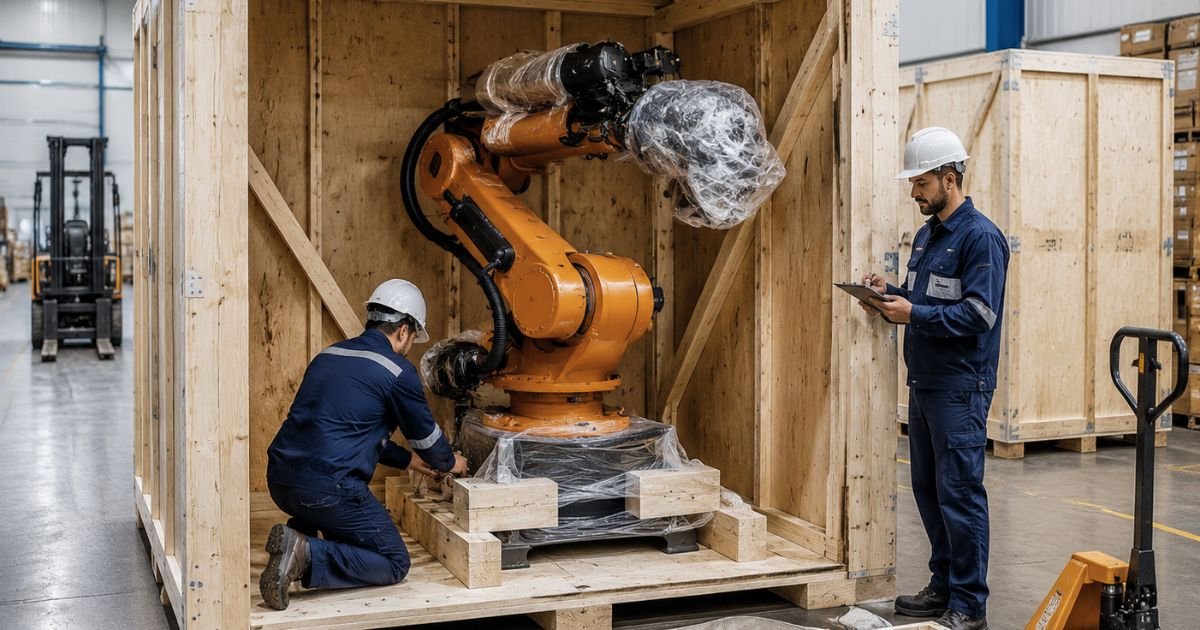
Robots are becoming essential across manufacturing, healthcare, logistics, and research industries. However, moving these advanced machines safely requires more than standard packaging. Robotics Crating provides customized protection designed for industrial robots, AI systems, and automation equipment with complex structures and sensitive components. From robotic arms to humanoid machines, custom robotics crates help prevent damage caused by impact, vibration, moisture, and improper handling.
These engineered solutions use specialized materials such as foam inserts, reinforced structures, and protective barriers to ensure secure transportation. Whether shipping locally or internationally, professional robotic equipment packaging helps companies protect valuable technology throughout every stage of delivery.
What Is Robotics Crating?
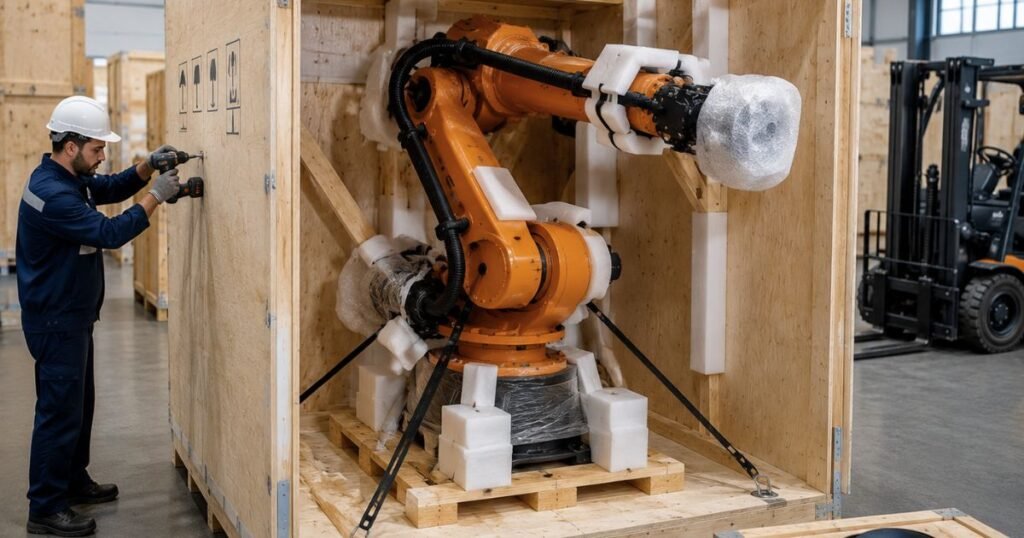
Robotics crating is the process of designing and building custom packaging systems for robots and automation equipment. Unlike standard wooden boxes, these crates consider the robot’s dimensions, movement points, weight distribution, and fragile components. The goal is to create secure protection throughout shipping, handling, and storage.
Companies use custom robotics crates for expensive machines that require precise handling. These include manufacturing robots, AI-powered machines, laboratory systems, and humanoid robot shipping crates. Each crate is engineered to reduce risks caused by vibration, impact, moisture, and improper handling.
A professional robotics crate usually combines strong structural materials with specialized interior protection. These systems may include reinforced wood frames, foam supports, protective barriers, and secure anchoring points.
| Standard Packaging | Robotics Crating |
| General size and shape | Designed around robot dimensions |
| Limited protection | Engineered impact protection |
| Basic materials | Advanced foam and stabilization systems |
| Suitable for simple equipment | Built for sensitive robotic systems |
Because robots often contain expensive components, engineered protection systems help companies avoid repair costs, production delays, and calibration problems after shipping.
Why Industrial Robots Require Custom Crating
Industrial robots require specialized packaging because their design creates unique transportation challenges. A robotic arm may have several joints, uneven weight distribution, and fragile electronic parts. A standard crate cannot provide enough stability during movement.
The main purpose of protecting robots during transit and storage is preventing damage before the machine reaches its final location. Even small impacts can affect calibration, sensor accuracy, or mechanical alignment.
Advanced robotic systems often include cameras, sensors, processors, and controllers. These parts need sensitive electronics protection because exposure to shock, static electricity, or moisture can cause failures.
Common risks during robot transportation
| Risk | Possible Damage |
| Vibration | Misalignment of mechanical parts |
| Impact | Broken sensors or damaged joints |
| Moisture | Corrosion and electronic failure |
| Poor support | Movement inside the crate |
| Static electricity | Electronic component damage |
For this reason, companies use robot packaging solutions for safe transportation that match the exact requirements of each machine.
Robotics Equipment That Can Be Crated
Robotics crating applies to many types of automated equipment. As robotics expands into manufacturing, healthcare, defense, and logistics, specialized packaging has become increasingly important.
Industrial manufacturers often require robotic equipment packaging for robotic arms, welding systems, assembly machines, and complete production cells. Research organizations may need secure R&D equipment shipping solutions for experimental robots and prototypes.
Some common examples include:
| Equipment Type | Crating Requirement |
| Industrial robotic arms | Joint stabilization and heavy-duty support |
| Humanoid robots | Body-shaped protection and balance control |
| Collaborative robots | Lightweight but secure packaging |
| Robotic cells | Large custom structures |
| AI robots | Sensor and electronics protection |
| Laboratory robots | Precision handling |
The demand for shipping crates for humanoid robots is increasing as companies develop robots for warehouses, healthcare, customer service, and defense applications.
Humanoid systems require special attention because their body shape creates unusual packaging needs. Professional providers create custom crates designed for humanoid robots by considering arms, legs, head clearance, and sensitive internal systems.
How the Robotics Crating Process Works
Creating a robotics crate starts with understanding the equipment. Specialists first inspect the robot and collect measurements. They evaluate weight, dimensions, lifting points, fragile areas, and transportation requirements.
The next stage involves custom packaging based on robot dimensions. Engineers design the crate structure around the machine rather than forcing the robot into a standard container.
For humanoid robots, designers focus on head clearance and limb stabilization. They also consider center of gravity protection for robots because unstable positioning can increase movement during shipping.
The typical process includes:
| Step | Purpose |
| Equipment assessment | Understand robot requirements |
| Measurement | Create accurate crate dimensions |
| Design engineering | Develop structural protection |
| Interior fitting | Add foam and supports |
| Securing equipment | Prevent movement during transport |
| Final inspection | Confirm shipping readiness |
Interior protection often includes precision foam inserts for humanoid robots. These inserts hold delicate sections while preventing unnecessary pressure on joints and sensors.
A well-designed crate also supports safe handling of humanoid robots during logistics by including lifting points, access panels, and loading features.
Protective Materials Used in Robotics Crating
Robotic equipment requires advanced protective materials because many components are sensitive. Crate builders select materials based on weight, fragility, electronics, and transportation conditions.
Precision foam inserts are among the most common solutions. They create a customized protective layer around robotic parts. These inserts prevent movement and reduce impact forces.
Different foam materials provide different benefits:
| Material | Purpose |
| Closed-cell polyethylene foam | Durable impact protection |
| Crosslinked PE foam | Smooth protection for sensitive surfaces |
| Urethane foam padding | Soft support for lightweight parts |
| ESD-safe foam | Protects electronics from static |
Robot shipping crates with foam protection often combine structural strength with internal cushioning. This approach creates better protection than using wood alone.
For electronic-heavy systems, companies use ESD-safe packaging for robotic electronics. Anti-static materials prevent electrical discharge that may damage sensors, processors, and control systems.
Moisture protection is also important. Moisture-resistant robot packaging uses barriers and protective layers to reduce corrosion risks during long-distance transportation.
Export Crating for Robotics and Automation Equipment
International robot shipments require additional preparation. Export transportation exposes equipment to longer travel times, changing climates, humidity, and repeated handling.
Companies use export shipping crates designed according to international requirements. These crates often include treated wood, reinforced structures, and moisture-control solutions.
For global shipments, packaging specialists consider:
| Factor | Importance |
| Export regulations | Avoid customs delays |
| Moisture protection | Prevent corrosion |
| Strong construction | Handle long transport routes |
| Documentation | Support international delivery |
Large robotics companies often require robotics shipping services that include both packaging and export preparation. This creates a smoother process from factory floor to final destination.
For defense, manufacturing, and international deployments, robotics packaging for manufacturing and defense requires higher protection standards because equipment value and operational importance are significant.
On-Site Robotics Crating Versus Off-Site Crating
Companies can choose between building crates at their facility or sending equipment to a professional packaging location. The right option depends on robot size, location, and project requirements.
On-site crating works well for large machines that are difficult to move. Specialists can build the crate around the robot while it remains inside the facility.
Off-site services may provide better access to advanced tools, materials, and controlled packaging environments.
| On-Site Crating | Off-Site Crating |
| Less equipment movement | Professional packaging facilities |
| Good for large robots | Better for repeated production |
| Faster site preparation | More controlled engineering |
Many companies prefer modular reusable robot crates because they reduce long-term costs. These systems can support multiple shipments and future deployments.
Knockdown crates for field deployment are also useful for companies transporting robots to different locations. They can be stored efficiently and assembled when required.
Shipping Methods for Crated Robotic Equipment
The transportation method affects crate design. A robot shipped by air requires different protection compared with equipment transported by ocean freight.
Companies use various methods depending on distance, urgency, and equipment value.
| Shipping Method | Best Use |
| Truck freight | Domestic transportation |
| Air freight | Fast international delivery |
| Ocean freight | Large overseas shipments |
| Dedicated transport | High-value robotics |
Professional robot transportation solutions include secure loading, lifting, tracking, and handling procedures.
During transportation, crates require impact absorption during transportation because sudden movement can affect internal components. Strong packaging ensures damage-free robotic equipment transport from departure to installation.
Robotics Crating Costs and Factors Affecting Pricing
The cost of robotics crating depends on several factors. There is no single price because every robot has different requirements.
Important pricing factors include:
| Factor | Impact |
| Robot size | Larger crates require more material |
| Weight | Heavy systems need stronger structures |
| Protection level | Advanced materials increase cost |
| Shipping method | International transport requires extra preparation |
| Custom design | Engineering increases complexity |
Companies investing in high-value robotic system protection often consider custom crates a necessary expense rather than an optional service.
Reusable designs can reduce future costs. Reusable packaging for multiple robot shipments helps organizations save money when transporting similar equipment repeatedly.
Choosing a Robotics Crating Company
Selecting the right provider is essential because poor packaging can damage expensive robotic systems. A reliable company should understand robotics, engineering, transportation risks, and specialized materials.
Look for providers with experience in:
| Capability | Why It Matters |
| Custom crate engineering | Creates accurate protection |
| Robotics experience | Understands machine sensitivity |
| Foam design | Protects delicate components |
| Export knowledge | Supports international shipping |
A professional provider should offer robot crate engineering and design instead of simply building standard wooden boxes.
The best companies create specialized packaging for complex robotics systems by combining structural engineering, protective materials, and careful handling procedures.
As robotics continues expanding, demand for industrial-grade robotic transportation packaging will continue growing. Advanced machines need equally advanced protection systems.
Frequently Asked Questions About Robotics Crating
Why do robots need custom crates?
Robots require custom crates because their size, weight, electronics, and mechanical parts create unique transportation challenges. Standard packaging cannot provide enough protection.
Can humanoid robots be shipped safely?
Yes. With properly designed shipping crates for humanoid robots, companies can safely transport advanced robotic systems using specialized supports, foam inserts, and stabilization methods.
What materials protect robots during shipping?
Common materials include wood, custom foam-lined wooden crates, anti-static foam, moisture barriers, and precision-cut cushioning systems.
Are robotics crates reusable?
Many robotics crates can be reused. Reusable shipping crates and modular designs help companies reduce packaging costs during repeated deployments.
Why is foam important in robotics packaging?
Foam protects sensitive parts by reducing movement, absorbing impact, and supporting fragile components such as sensors, joints, and cameras.
Do AI robots require special packaging?
Yes. AI and automation equipment protection requires attention to electronics, sensors, processors, and communication systems because these components are highly sensitive.
Conclusion
Robotics crating has become an essential part of modern automation logistics. As robots become more advanced, their transportation requirements become more complex. Custom-designed crates provide the stability, protection, and reliability needed for safe movement.
From industrial machines to humanoid robots, professional packaging solutions help companies protect valuable technology. With engineered designs, specialized materials, and careful handling, robotics crating supports the future of automation without unnecessary transportation risks.